Enterline & Partners Consulting | info@enterlinepartners.com

News & Resources

What Is Capital In The RIA?

In the EB-5 Reform and Integrity Act of 2022 (“RIA”), the definition of “Capital” as an investment for EB-5 has been updated.  Capital includes cash, as well as any real, personal, or mixed tangible assets that are owned and controlled by the investor and which are invested in, or contributed

David Enterline speaks at IIUSA EB-5 Event in East Asia

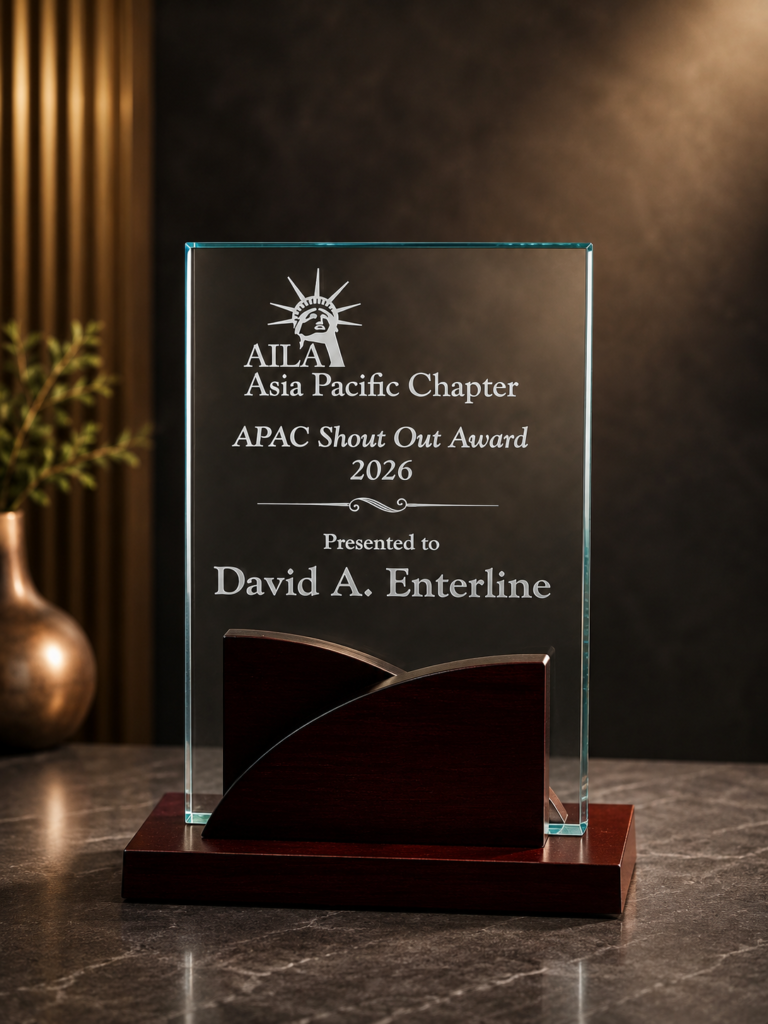
Enterline and Partners Managing Partner David Enterline served as Panel Moderator for the IIUSA 2025 Passport Series: East Asia event held in October this year.  He moderated the panel “How to Evaluate and Select the Right EB-5 Project for Investors”. IIUSA is the national membership-based EB-5 industry association for EB-5

What is a Form I-129F? Petition for Alien Fiancé Explained

A Form I-129F is a Petition for Alien Fiancé(e) filed through the United States Citizenship and Immigration Services (“USCIS”). The form can only be filed by a U.S. citizen ages twenty-one (21) and above. Non-US citizens including lawful permanent residents are not able to petition a foreign fiancé(e). Form I-129F

What Is An Alien Registration Number And What Is It For?

The U.S. Alien Registration Number, commonly abbreviated as an A-Number, is a unique identifier assigned to non-citizens by the United States Citizenship and Immigration Services (“USCIS”). This A-Number begins with the letter “A” followed by 8 or 9 numbers (such as A012345678).  It is used to track individuals throughout their

What Does A 214(b) Refusal Mean in U.S. Immigration Law?

A 214(b) refusal in U.S. immigration law refers to a specific section of the Immigration and Nationality Act (“INA”) that is often cited when a U.S. consular officer denies a nonimmigrant visa application. This section is often seen with individuals applying for B-1/ B-2 Visitor Visas but it is applicable

Establishment Of An EB-5 Regional Center

The EB-5 Reform and Integrity Act of 2022 (“RIA”) introduced significant changes to the EB-5 Immigrant Investor Program, including changes to the establishment and oversight of Regional Centers. A Regional Center’s establishment represents a strategic effort to stimulate economic growth by drawing in foreign investment and generating employment opportunities within

Step-by-Step Guide to the K-1 Fiance(é) Visa Process

Applying for a K-1 fiancé(e) visa involves multiple government agencies, including United States Citizenship and Immigration Services (“USCIS”), the National Visa Center (“NVC”), and the appropriate U.S. Embassy or Consulate. As a result, the process requires careful coordination at each stage. If you are researching how to apply for a

F4 Visa Bulletin Update: Waiting Time for Family-Based Sibling Immigration

The U.S. immigration system provides a specific pathway for U.S. citizens to sponsor their siblings for lawful permanent residency (“Green Card.”) The Family-Based Fourth Preference (F4) category is dedicated to the brothers and sisters of adult U.S. citizens ages twenty-one (21) and above. While this is a popular route for

K-1 Visa Applicants Subjected to Social Media Vetting

Effective March 30, 2026, all K-1 fiancé(e) visa applicants will be subjected to the Department of State (“DOS”) online vetting process. As part of the interview process at the Embassy or Consulate, those applying for a K-1 visa will be required to adjust their social media settings to “public” or

Vietnamese Names Listed in a Different Order on U.S. Visas and Green Cards

United States government posts have frequently listed Vietnamese citizens’ names on government documents in a different order such as on visas and Form I-551 (“Green Cards”.) This often happens because Vietnamese passports list names in the order of last name (or “family name” or “surname”) followed by the middle name

CATEGORY
recent posts
CTA_Collection
Zalo
Phone
WhatsApp
Messenger
Messenger
WhatsApp
Phone
Zalo