The K-1 fiancé(e) visa interview is one of the final steps before a foreign fiancé(e) can travel to the United States and marry his/her U.S. citizen petitioner. If your K-1 fiancé(e) visa is refused following the interview, what should you do next?
The answer depends on why the consular officer refused the K-1 fiancé(e) visa and whether the issue involves missing documents, administrative processing or another eligibility concern.
At Enterline and Partners, our U.S. immigration attorneys can review the refusal, explain what it means for your case and help you determine the next steps.
Common Reasons for K-1 Fiancé(e) Visa Refusals
A K-1 fiancé(e) visa applicant must meet the eligibility requirements to the satisfaction of the interviewing consular officer.
Problems can arise for many different reasons, including but not limited to:
- Missing or incomplete documents: The K-1 fiancé(e) visa applicant may not have provided a required civil record, police certificate, financial document or other evidence.
- Questions about the relationship: K-1 fiancé(e) visa applicants must provide evidence of their relationship with the U.S. citizen petitioner. The consular officer can request for additional evidence or to determine whether the relationship is genuine.
- Failure to Be Legally Free to Marry: Both parties generally must have been legally free to marry when the Form I-129F, Petition for Alien Fiance (“Form I-129F”) is filed with the United States Citizenship and Immigration Services (“USCIS”) and remain free to marry throughout the duration of the case.
- Financial support concerns: The consular officer may request evidence showing that the U.S. citizen petitioner can adequately financially support the K-1 fiancé(e) visa applicant.
- Prior immigration violations: Previous unlawful presence, overstays or other immigration problems can affect eligibility.
- Fraud or misrepresentation concerns: Providing false information or fraudulent documents can result in a refusal and inadmissibility.
- Criminal, drug-related or other grounds of inadmissibility: Certain criminal conduct, drug violations and other circumstances listed under U.S. immigration law may prevent K-1 fiancé(e) visa issuance.
What Does a 221(g) Refusal Mean for a K-1 Fiancé(e) Visa?
A refusal under Section 221(g) of the Immigration and Nationality Act does not always mean that your K-1 fiancé(e) visa case has reached a permanent end.
A consular officer may issue 221(g) refusal when there is not yet enough information to determine that you qualify for the visa.
If the officer requests additional documents, you should receive instructions explaining what information is needed and how to submit it. Once you provide the requested material, the consular officer can reassess.
In many situations, K-1 fiancé(e) visa applicants are given one year from the date of a 221(g) refusal to provide requested additional information.
A case may also remain refused under 221(g) while undergoing administrative processing. There is no standard processing time because the length of review depends on the circumstances of the individual case. Once processing is complete, the officer may determine that the K-1 fiancé(e) visa applicant qualifies or remains ineligible.
Enterline and Partners has experience helping clients address K-1 fiancé(e) visa 221(g) refusals. Our attorneys can review what the U.S. Embassy in Manila, the U.S. Consulate in Ho Chi Minh City and Consulates throughout Asia is requesting and helping you determine how to respond.

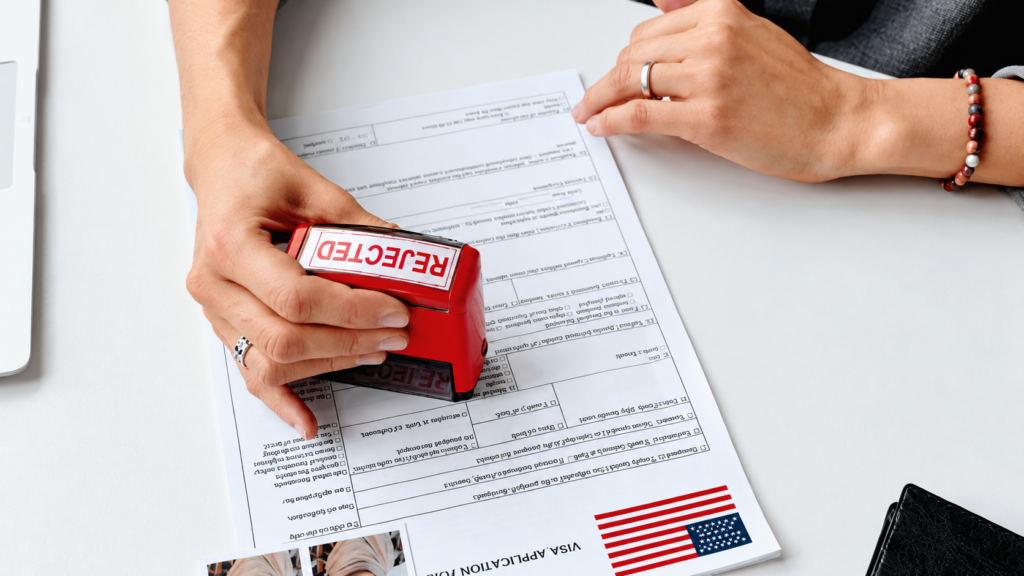
K-1 visa applicant receives a visa refusal notice.
What Should I Do After My K-1 Fiancé(e) Visa Is Refused?
The next step depends on what happened during the interview.
1. Review the Refusal Notice Carefully
Start with the notice you received from the U.S. Embassy in Manila or the U.S. Consulate in Ho Chi Minh City.
Look for the section of immigration law cited by the consular officer and any instructions about submitting documents, completing additional processing or seeking a waiver of inadmissibility.
Applicants who are found ineligible are generally informed of the applicable legal ground and whether a waiver may be available.
2. Identify the Reason for the K-1 Visa Fiancé(e) Refusal
Before taking further action, determine whether the issue involves missing evidence, administrative processing, ineligibility or a separate ground of inadmissibility.
3. Gather Any Documents the Consular Officer Requested
If the interviewing consular officer requested specific documents, gather them carefully and follow the U.S. Embassy in Manila or the U.S. Consulate in Ho Chi Minh City’s submission instructions.
Focus on what the officer specifically requested and whether it directly addresses the concern raised at the interview. Our U.S. immigration attorneys can help you review the request and prepare a focused response.
4. Respond to a 221(g) Request
K-1 fiancé(e) visa applicants should respond as quickly as possible as waiting too long may result in the approved I-129F Petition received from USCIS to be resent back with a notice that it should be revoked.
5. Consider Whether a Waiver May Be Available
Some grounds of ineligibility may be overcome through a waiver, while others may not. Determining whether a waiver exists depends on the particular section of law involved. The consular officer should generally advise an applicant when a waiver may be available.
However, a waiver is not available for every type of denial. Before applying, make sure you understand why the visa was refused and what requirements you would need to meet.
6. Speak With a U.S. Immigration Attorney in the Philippines, Vietnam and Throughout South-East Asia About Your Next Steps
If the refusal involves a past immigration issue, criminal history, fraud concerns or other matters, it may help to have an attorney review the case before you take another step.
A licensed U.S. immigration attorney can look at the refusal notice, your Form I-129F, and other supporting documents to help you understand your options including responding to a 221(g) refusal, seeking a waiver, filing a new Form I-129F or considering another immigration path.
At Enterline and Partners, our attorneys can review your case and help you decide what to do next.

An applicant receives legal guidance for a K-1 visa refusal.
Frequently Asked Questions About K-1 Visa Interview Denials
A K-1 fiancé(e) visa refusal can leave you unsure about what happens next. Our U.S. immigration attorneys answer some common questions about K-1 visa denials below.
What are the red flags for a K-1 fiancé(e) visa?
There is no official list of K-1 visa “red flags.” However, consular officers may ask more questions if there are inconsistencies in the Form I-129F, limited evidence of an ongoing relationship, conflicting answers about the couple’s history or unresolved prior marriages.
How do I appeal a K-1 visa fiancé(e) denial from the U.S. Embassy in Manila or the U.S. Consulate in Ho Chi Minh City?
There is no standard appeal process for a K-1 visa refusal made by the U.S. Embassy in Manila or the U.S. Consulate in Ho Chi Minh City. If the consular officer issued a 221(g) refusal, follow the instructions provided.
Will a K-1 visa denial affect future visa applications?
It can, depending on why the visa was refused. A 221(g) refusal for a missing document is very different from a finding involving fraud, misrepresentation, unlawful presence or a criminal issue. Future visa applications may ask about your immigration history, so you should answer accurately. If the first refusal involved an ongoing ground of inadmissibility, that issue may continue to affect later applications unless it is resolved or waived.
Talk to a U.S. Immigration Attorney After a K-1 Visa Denial
A K-1 visa refusal does not tell you by itself whether the case can still move forward. The legal basis for the decision, the instructions from the consular officer and your immigration history all matter when deciding what to do next.
At Enterline and Partners, our U.S. immigration attorneys lend their expertise to clients so that they can understand visa refusals and evaluate their available options.
Our team can review what happened at your interview, examine the documents already submitted and determine whether the next step may involve a 221(g) response, waiver, new petition or another immigration strategy.
If your K-1 visa was denied at the interview and you are unsure what to do next, contact our office to schedule a consultation.
ENTERLINE & PARTNERS CONSULTING
Ho Chi Minh City, Vietnam Office
Tel: +84 933 301 488
Email: info@enterlinepartners.com
Facebook: Enterline & Partners – Dịch vụ Thị thực và Định cư Hoa Kỳ
YouTube: @EnterlineAndPartnersConsulting
Website: https://enterlinepartners.com
Manila, Philippines Office
Tel: +63 917 543 7926
Email: info@enterlinepartners.com
Facebook: Enterline and Partners Philippines
Website: https://enterlinepartners.com/en/home/
Copyright 2026. This article is for information purposes only and does not constitute legal advice. This article may be changed with or without notice. The opinions expressed in this article are those of Enterline and Partners only.