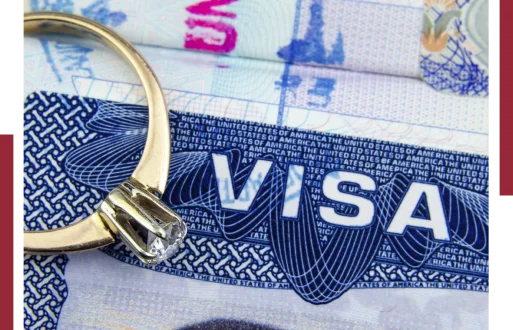





















K-1 Fiancé(e) Visa
Introduction to the K-1 Fiance(e) Visa
The K-1 fiancé/fiancée visa allows a U.S. citizen to petition his/her foreign fiancé(e) to enter and marry in the United States. Both the U.S. citizen and foreign fiancé(e) must be legally free to marry one another at the time of submitting the Form I-129F Petition for Alien Fiancé(e) with the United States Citizenship and Immigration Service (“USCIS”). Once the foreign fiancé(e) arrives in the United States on a K-1 visa, he/she must marry his/her U.S. citizen fiancé(e) within 90 days upon arrival.
Following marriage, the newlywed couple files for adjustment of status with USCIS as a prerequisite to receiving his/her Lawful Permanent Resident status.
Enterline & Partners, with offices in Ho Chi Minh City, Vietnam and Manila, Philippines, supports the full K-1 visa process from A to Z – from filing the I-129F with USCIS, preparing NVC documentation, to the interview at the U.S. Consulate in Ho Chi Minh City or the U.S. Embassy in Manila. Over 35 years of combined experience. Licensed U.S. immigration attorneys.
Benefits of the K-1 Fiancé(e) Visa
A K-1 visa is beneficial in situations where it is not practical for a couple to file for a CR-1/IR-1 visa. An example includes a foreign fiancé(e) having children whom he/she would like for them to join on a K-2 visa but they are over the age of eighteen (18) yet under the age of twenty-one (21); a foreign fiancé(e) from the Philippines who was divorced abroad but not annulled within the Philippines; or a U.S. citizen over the age of fifty (50) engaged to a Cambodian citizen.
For a more thorough assessment of whether a K-1 visa would be in your best interest, we encourage you to speak with an experienced immigration attorney.
Step-by-Step Process
Filing the Petition
The U.S. citizen petitioner files a Form I-129F Petition for Alien Fiancé(e) with supporting documents.
Receipt of Petition
Once USCIS receives the Form I-129F Petition, a receipt number will be issued.
Approval and Transfer
After USCIS approves the Form I-129F Petition, the file will be sent to the National Visa Center (“NVC”) where it will receive a State Department case number.
Case Number Allocation
The NVC forwards the file to the U.S. Embassy or Consulate in which the foreign fiancé(e) is living or has been designated and the visa application location.
Forwarding to Embassy
The U.S. Embassy or Consulate will inform the foreign fiancé(e) that he/she may proceed in scheduling an interview appointment.
Interview Preparation
Additional supporting documentation is prepared including the DS-160 Online Application.
Medical Evaluation
The foreign fiancé(e) undergoes his/ her medical evaluation.
Interview Scheduling
Following the medical clearance, the foreign fiancé(e) may proceed to his/her K-1 visa interview.
Visa Interview
During the interview, the consular officer will assess the relationship between the U.S. citizen and the foreign fiancé(e). If satisfied that the relationship is bona-fide and that the couple will marry within 90 days upon arrival, the K-1 visa will be issued.
Entry and Marriage
The foreign fiancé(e) departs for the United States and after entry, marries the U.S. citizen petitioner. Afterwards, the foreign fiancé(e) must file for adjustment of status.
Why Choose Enterline & Partners for Your K-1 Fiancé(e) Visa?
Our firm has over 35 years of combined experience representing families in Vietnam and the Philippines looking to bring their foreign spouse to the United States on a CR-1/IR-1 Immigrant Visa. We offer a full-service, hands-on, comprehensive package designed to guide the entire process from beginning to end. As immigration attorneys with direct experience working with the U.S. Consulate General in Ho Chi Minh City and the U.S. Embassy in Manila, we provide our clients in both Vietnam and the Philippines with a unique and personalized approach unmatched by other immigration attorneys.
hear from enterline & partners clients
An exceptional attorney and consummate professional, Ryan has an encyclopedic knowledge of immigration law. He kept us informed along every step of the way, and Maricar helped us keep track of our many documents and appointments. Their handling of our case changed our lives. The costs were extremely reasonable, and included far more than I would have imagined.
I have and will continue to recommend Attorney Ryan to anyone without hesitation. Ryan and Maricar, thank you for everything!
Best Regards,
Ron and Huyen Schroeder
Ryan and Leah guided us through the process. My wife recently passed her visa interview at the US Consulate with flying colors.
We plan to keep Ryan and Leah on board up to and through my wife’s naturalization. They answered all of our questions and assisted us when we reached important milestones in our case.
It’s well worth the money spent to have things done correctly the first time!
Frequently Asked Questions About the K-1 Fiancé(e) Visa
What is the Two-Year Meeting Requirement?
Before the U.S. citizen can file the I-129F Petition, the couple must have physically met in person within the past two (2) years. A relationship that is limited to online communication only will not satisfy this requirement.
Are Chat-Logs or Messages From Other Communication Apps Required to Document Proof of a Relationship?
While chat-logs and messages from communication apps are a way to show a bona-fide relationship, these are not required.
Can the Foreign Fiancé(e) Visit the United States While the K-1 Visa is Pending?
If the foreign fiancé(e) holds a valid B-1/B-2 visitor visa, he/she may use that visa to request to enter the United States on a temporary basis. If the foreign fiancé(e) does not have a B-1/B-2 visa, they are not precluded from applying for the visa. It is strongly encouraged to fully disclose to the interviewing consular officer that he/she has a pending K-1 visa application.
Are there Exceptions to the Two-Year Meeting Requirement?
The U.S. citizen may request a waiver to the two-year meeting requirement if it can be demonstrated that physically meeting in advance of filing the I-129F Petition would result in extreme hardship to the U.S. citizen petitioner or if such meeting in advance would violate long-standing traditions to the foreign fiancé(e)’s customs.
What Proof of Financial Capacity Does the U.S. Citizen Petitioner Need to Demonstrate?
Unlike a CR-1/IR-1 Immigrant Visa, a K-1 visa is a nonimmigrant visa. As a result, the U.S. citizen does not file a Form I-864, Affidavit of Support. While a Form I-134, Declaration of Financial Support may be submitted, such documentation is not required. However, being able to demonstrate financial capacity can be shown through proof of funds such as bank statements, home ownership, stocks and bonds, investments, and other assets.
What Happens if the U.S. Citizen and Foreign Fiancé(e) Marry Abroad Before the K-1 Visa is Issued?
Because the K-1 visa requires both parties to remain single and marry within the United States, marriage abroad prior to the K-1 visa issuance will automatically terminate the I-129F Petition. Couples are allowed to hold non-legally recognized religious ceremonies and blessings prior to the K-1 visa issuance prior that such ceremony does not create a valid marriage.
What Happens if the U.S. Citizen and Foreign Fiancé(e) Do Not Marry Within 90 Days Upon Arrival?
Failure to marry within 90 days upon arrival will require the foreign fiancé(e) to immediately depart the United States.
How Do I File for Adjustment of Status After Marriage?
Provided that the couple marries within 90 days upon arrival, the foreign fiancé(e), now spouse, must file for adjustment of status. The newly married couple files a Form I-485, Application to Register Permanent Residence or Adjust Status with USCIS. If the foreign spouse wishes to seek employment prior to the approval of adjustment of status, he/she will also be required to file a Form I-765, Application for Employment Authorization. If he/she is planning on traveling outside the United States prior to receiving their Green Card, a Form I-131, Application for Travel Document must also be submitted.
How Long Does the K-1 Visa Process Take From Vietnam and the Philippines?
Processing times vary by country and case. For Vietnamese applicants, the K-1 visa process typically takes 9-18 months from the date the I-129F is filed to U.S. entry. For Filipino applicants, processing through the U.S. Embassy in Manila may take a similar or slightly longer timeline given the Embassy’s high case volume. The process involves three main stages: USCIS adjudication of the I-129F (6-12 months), NVC transfer (1-2 months), and consular interview scheduling and processing (1-3 months). Actual timelines depend on individual case circumstances and USCIS workload at the time of filing.
What Is the Difference Between the K-1 Visa and the CR-1/IR-1 Visa?
The key difference: the K-1 visa is for engaged couples who are not yet married – the couple marries in the United States after the fiancé(e) enters on the K-1. The CR-1/IR-1 spousal visa is for couples who are already legally married – the couple must marry first, then file for the spousal visa. The K-1 is often faster to process than the CR-1, but requires an additional Adjustment of Status step after arrival. The CR-1/IR-1 allows the beneficiary to enter the United States as a conditional lawful permanent resident immediately upon arrival, with no further adjustment required. Enterline & Partners’ immigration attorneys will advise on the most appropriate pathway for your specific situation.
How Much Does the K-1 Visa Cost From Vietnam or the Philippines?
K-1 visa costs consist of two main components. Government fees include the USCIS filing fee for the I-129F Petition, the DS-160 fee and consular interview fee at either the U.S. Consulate in Ho Chi Minh City or the U.S. Embassy in Manila, and the medical examination fee at the designated facility – these fees change periodically. Attorney fees depend on the complexity of each case and are discussed in detail during the initial consultation. Enterline & Partners is committed to 100% transparency on all costs before we begin – no hidden fees. Contact us for the most current fee information.
k-1 Latest News

K-1 Fiancé(e)’ Visa vs. CR-1 Spousal Visa: Which is the Right Path For Your Vietnamese Fiance(é) Or Spouse?
For many American and Vietnamese couples looking to immigrate to the United States, a major question is whether they should apply for a K-1 fiancé(é) visa or a CR-1 spousal visa. While both lead to lawful permanent residence status (“Green Card”), they work very differently. A K-1 fiancé(e) visa allows
New Adjustment of Status Policy May Force Applicants To Attend Visa Interviews at a U.S. Embassy or Consulate
On May 22, 2026, the United States Citizenship and Immigration Services (“USCIS”) announced a shift in policy in which the agency will approve Adjustment of Status (“AOS”) applicants for adjustment only in extraordinary circumstances. The policy, which USCIS says is consistent with long-standing immigration law and court decisions, will place

What Questions Will the U.S. Consulate in Ho Chi Minh City Ask My Vietnamese Fiancé(e)?
When your Vietnamese fiancé(e) (“fiance’) undergoes his/ her interview at the U.S. Consulate in Ho Chi Minh City, the consular officer’s primary goal is to determine if your relationship is genuine and bona fide. While the exact K-1 visa interview questions vary based on the specific details of your case,
CONTACT US TODAY FOR MORE INFORMATION
Why Clients Choose Enterline & Partners

Licensed U.S. immigration attorneys with over 35 years of combined experience. Members of the American Immigration Lawyers Association (AILA) - not visa consultants.

Direct access to licensed U.S. attorneys from our offices in Ho Chi Minh City and Manila. Every case is handled by a qualified legal professional - not outsourced to staff.

K-1 fiancé visas, CR-1/IR-1 spousal visas, EB-5 investor visas, L-1A, EB-1C, EB-3 and more.