


























CR-1/IR-1 Immigrant Visa for Spouse
Introduction to the CR-1/IR-1 Immigrant Visa for Spouse
A CR-1/IR-1 Immigrant Visa is the visa classification for a spouse of a U.S. citizen. In order to be classified as a CR-1/IR-1 Immigrant, the couple must be lawfully married. If either spouse was previously married, they must present proof that their prior marriage was terminated.
- The U.S. citizen spouse must also be domiciled in the United States. If the U.S. citizen spouse is not domiciled in the U.S., an experienced immigration lawyer can provide competent advice and recommendations in order to establish domicile.
- The U.S. citizen spouse must also be able to present proof of financial capacity to support the foreign spouse. This can be shown commonly through tax returns. In the event that tax returns show insufficient income, supplemental assets may be presented.
The primary difference between a CR-1 and IR-1 is based on how long the couple has been married at the time of either the foreign spouse’s arrival in the U.S., or the date of adjustment of status if the foreign spouse is already in the United States. A foreign spouse who has been married for less than two (2) years at the time of entry or adjustment of status is issued a CR-1 immigrant visa, while the foreign spouse who has been married for more than two (2) years at the time of entry or adjustment of status receives an IR-1.
Benefits of a CR-1/IR-1 Immigrant Visa for Spouse
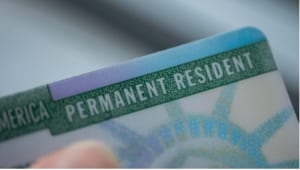
Upon arriving in the United States as a CR-1/IR-1, the foreign spouse will be considered a Lawful Permanent Resident and receive a Green Card allowing the foreign spouse the right to work and live without restrictions. In addition, after being a Lawful Permanent Resident for three (3) years, the foreign spouse may be eligible to apply for U.S. citizenship through naturalization.
CR-1/IR-1 vs. K-1: Which Visa Is Right for You?
The core difference: the CR-1/IR-1 is for couples who are already legally married – the Vietnamese or Filipino spouse enters the United States as a lawful permanent resident and receives a Green Card upon arrival.
The K-1 fiancé(e) visa is for engaged couples who are not yet married – the foreign fiancé(e) must marry within 90 days of entry, then file for Adjustment of Status. The CR-1/IR-1 typically takes 12-24 months to process but involves fewer immigration steps over the long term.
Contact us to discuss which pathway is most appropriate for your situation.
CR-1/IR-1 Visa Process: From I-130 to U.S. Entry
Information Collection
Our office collects all the information that we need from you at the start of the case and we will complete all the forms that are required throughout the process so you do not have to.
Filing Form I-130
Our office completes and files a Form I-130 Petition for Alien Relative with the United States Citizenship and Immigration Services (“USCIS) with supporting documentation.
Receipt of Petition
Once USCIS receives the Form I-130 Petition, a receipt number is issued. Processing times vary greatly depending on which USCIS service center processes the Form I-130 Petition.
USCIS Approval
After USCIS approves the Form I-130 Petition, the file will be sent to the National Visa Center (“NVC”).
Additional Documentation
Our office completes additional documentation including a DS-260 Online Visa Application, an I-864, Affidavit of Support as well as supporting documentation required by the NVC.
NVC Review
After all documentation is approved by the NVC, the file will be documentarily qualified before it is sent to the U.S. Embassy or Consulate and an interview is scheduled for the applicant spouse.
Embassy Notification
Our office will be notified that the U.S. Embassy or Consulate has received the file and an interview date has been scheduled.
Medical Evaluation
The applicant will need to schedule a medical evaluation before proceeding for the visa interview. We will guide you on scheduling a medical evaluation.
Interview Preparation
Upon receiving medical clearance, the interview may proceed.
Interview Day Support
Our office will prepare a final checklist of documentation as well as hold interview preparation sessions before the scheduled appointment.
Consular Approval
On the day of the interview, we will be available to answer calls or questions or any issues arise.
Approval
Provided that there are no outstanding issues, the consular officer will approve the immigrant visa.
Issuance
The CR-1/IR-1 Immigrant Visa for Spouse will arrive in 7-10 business days.
Why Choose Our Firm for a CR-1/IR-1 Immigrant Visa for Spouse?
Our firm has over 35 years of combined experience representing families in Vietnam and the Philippines looking to bring their foreign spouse to the United States on a CR-1/IR-1 Immigrant Visa. We offer a full-service, hands-on, comprehensive package designed to guide the entire process from beginning to end. As immigration attorneys with direct experience working with the U.S. Consulate General in Ho Chi Minh City and the U.S. Embassy in Manila, we provide our clients in both Vietnam and the Philippines with a unique and personalized approach unmatched by other immigration attorneys.
hear from enterline & partners clients
An exceptional attorney and consummate professional, Ryan has an encyclopedic knowledge of immigration law. He kept us informed along every step of the way, and Maricar helped us keep track of our many documents and appointments. Their handling of our case changed our lives. The costs were extremely reasonable, and included far more than I would have imagined.
I have and will continue to recommend Attorney Ryan to anyone without hesitation. Ryan and Maricar, thank you for everything!
Best Regards,
Ron and Huyen Schroeder
Ryan and Leah guided us through the process. My wife recently passed her visa interview at the US Consulate with flying colors.
We plan to keep Ryan and Leah on board up to and through my wife’s naturalization. They answered all of our questions and assisted us when we reached important milestones in our case.
It’s well worth the money spent to have things done correctly the first time!
Frequently Asked Questions
Besides the Form I-130 Petition, What Other Documents are Required?
A number of supporting documents are required including identification of both spouses, birth and marriage certificates, proof of prior marriage termination (if applicable), and documentation showing a bona fide marriage. Our experienced immigration lawyers may also recommend additional documentation to further strengthen one’s case.
Why Does the Process Take an Average of 1-2 Years to Complete?
Processing times are completely dependent on how quickly USCIS can adjudicate a Form I-130 Petition. Because of casework backlogs, the processing time has significantly increased in the aftermath of the COVID-19 Pandemic. In addition, after the NVC completes its processing and documentarily qualifies the case, the file must further wait for the U.S. Embassy or Consulate to schedule the interview.
If I am a Green Card Holder, Can I Still File for My Foreign Spouse and Convert the Process to a CR-1/ IR-1 After I Become a U.S. Citizen?
Yes, this is absolutely possible. A Green Card holder can file a Form I-130 Petition for their foreign spouse and upon naturalizing, the category will automatically change from an F2A (Spouses and Minor Children of Green Card Holder) to a CR-1/IR-1.
Can the Form I-130 Process Be Expedited?
The USCIS has specific criteria for expediting a Form I-130 Petition. More information can be found at https://enterlinepartners.com/language/en/how-can-i-expedite-a-petition-with-uscis/.
Can I Petition My Foreign Spouses Children/Step-Children as a CR-1/IR-1 Dependent?
A U.S. citizen may also petition for a step-child provided that the marriage between the petitioner and foreign spouse was created prior to the step-child turning eighteen (18) years of age. A separate petition for the step-child must be filed with USCIS.
Can My Foreign Spouse Visit Me on a U.S. Visitor/Tourist Visa While the Case is Pending?
If your foreign spouse has a valid B-1/B-2 Visitor Visa, they might be allowed to use that visa to enter the United States for a very specific and temporary purpose. Care should be taken if your foreign spouse wants to visit the U.S. after filing the I-130 Petition. The granting of entry is at the sole discretion of the U.S. Customs and Border Protection Agency Officer. We recommend you discuss this with a qualified U.S. immigration lawyer.
What is the difference between CR-1 and IR-1?
The CR-1 (Conditional Resident) issues a 2-year conditional Green Card, applied when the marriage is less than 2 years old at the time of entry into the United States. The IR-1 (Immediate Relative) issues a permanent 10-year Green Card, applied when the marriage is more than 2 years old at the time of entry. With a CR-1, the couple must file Form I-751 to remove the conditions before the 2-year period expires in order to receive a permanent Green Card.
How long does the CR-1/IR-1 visa process take from Vietnam or the Philippines?
The CR-1/IR-1 process typically takes 12-24 months from the date Form I-130 is filed to U.S. entry. The process consists of three main stages: USCIS adjudication of the I-130 (6-12 months), NVC document review and processing (2-4 months), and the consular interview at either the U.S. Consulate General in Ho Chi Minh City for Vietnamese applicants or the U.S. Embassy in Manila for Filipino applicants (1-3 months). Cases sponsored by a Green Card holder (LPR) rather than a U.S. Citizen will take longer due to annual visa caps under the F2A category.
Can a Green Card holder (LPR) sponsor a Vietnamese or Filipino spouse for a CR-1/IR-1?
Yes – a Lawful Permanent Resident (Green Card holder) can sponsor their Vietnamese or Filipino spouse through the F2A family preference category. However, unlike cases sponsored by U.S. Citizens – which fall under the Immediate Relative category with no annual visa limit – F2A cases are subject to annual visa caps and Visa Bulletin priority dates. This means the processing timeline can be significantly longer. If the Green Card holder naturalizes as a U.S. Citizen while the case is pending, the case can be upgraded to the Immediate Relative category, eliminating the waiting period.
What documents are required for the Form I-130 petition?
The basic Form I-130 petition package includes: the marriage certificate, proof of the petitioner’s U.S. citizenship or Green Card status, passports of both spouses, passport-style photographs, and the filing fee. If either spouse was previously married, divorce decrees or death certificates from all prior marriages must be included. Evidence of a bona fide marriage should also be prepared – such as photographs together, communication records, travel records showing in-person meetings, and proof of financial support. Enterline & Partners will guide you in preparing a complete and strong petition from the start.
How much does the CR-1/IR-1 visa process cost from Vietnam or the Philippines?
CR-1/IR-1 costs consist of two main components. Government fees include the USCIS Form I-130 filing fee, NVC immigrant visa processing fees, and the consular interview fee at either the U.S. Consulate in Ho Chi Minh City or the U.S. Embassy in Manila – these fees change periodically. Medical examination fees at the designated panel physician are also required prior to the interview. Attorney fees depend on the complexity of the case and will be discussed transparently during the initial consultation. Enterline & Partners is committed to full cost transparency before we begin – no hidden fees. Contact us for current fee information.
CR-1/IR-1 Latest News

How to Petition Your Vietnamese Spouse for a U.S. Green Card?
Marriage to a U.S. Citizen does not automatically grant a Vietnamese spouse the right to live permanently in the United States. Before a Vietnamese spouse can immigrate to the United States, the U.S. Citizen or Lawful Permanent Resident (“Petitioner”) must first establish the marital relationship, complete the required documentation and

K-1 Fiancé(e)’ Visa vs. CR-1 Spousal Visa: Which is the Right Path For Your Vietnamese Fiance(é) Or Spouse?
For many American and Vietnamese couples looking to immigrate to the United States, a major question is whether they should apply for a K-1 fiancé(é) visa or a CR-1 spousal visa. While both lead to lawful permanent residence status (“Green Card”), they work very differently. A K-1 fiancé(e) visa allows

What is a Form I-130A? Complete Guide for Spouse Beneficiaries 2026
A Form I-130A, Supplemental Information for Spouse Beneficiary, is required in every marriage-based Form I-130, Petition for Alien Relative (“Form I-130”). The supplemental form is submitted with the United States Citizenship and Immigration Services (“USCIS”) at the time of filing the Form I-130 which contains important background details about the
CONTACT US TODAY FOR MORE INFORMATION
Why Clients Choose Enterline & Partners

Licensed U.S. immigration attorneys with over 35 years of combined experience. Members of the American Immigration Lawyers Association (AILA) - not visa consultants.

Direct access to licensed U.S. attorneys from our offices in Ho Chi Minh City and Manila. Every case is handled by a qualified legal professional - not outsourced to staff.

K-1 fiancé visas, CR-1/IR-1 spousal visas, EB-5 investor visas, L-1A, EB-1C, EB-3 and more.