Enterline & Partners Consulting | info@enterlinepartners.com

David Enterline And Ryan Barshop Speak At AILA APAC Seoul Conference

Enterline and Partners attorneys David Enterline and Ryan Barshop recently spoke at the 2025 American Immigration Lawyers Association (“AILA”), Asia Pacific Chapter (“APAC”) Annual Conference in Seoul, South Korea.
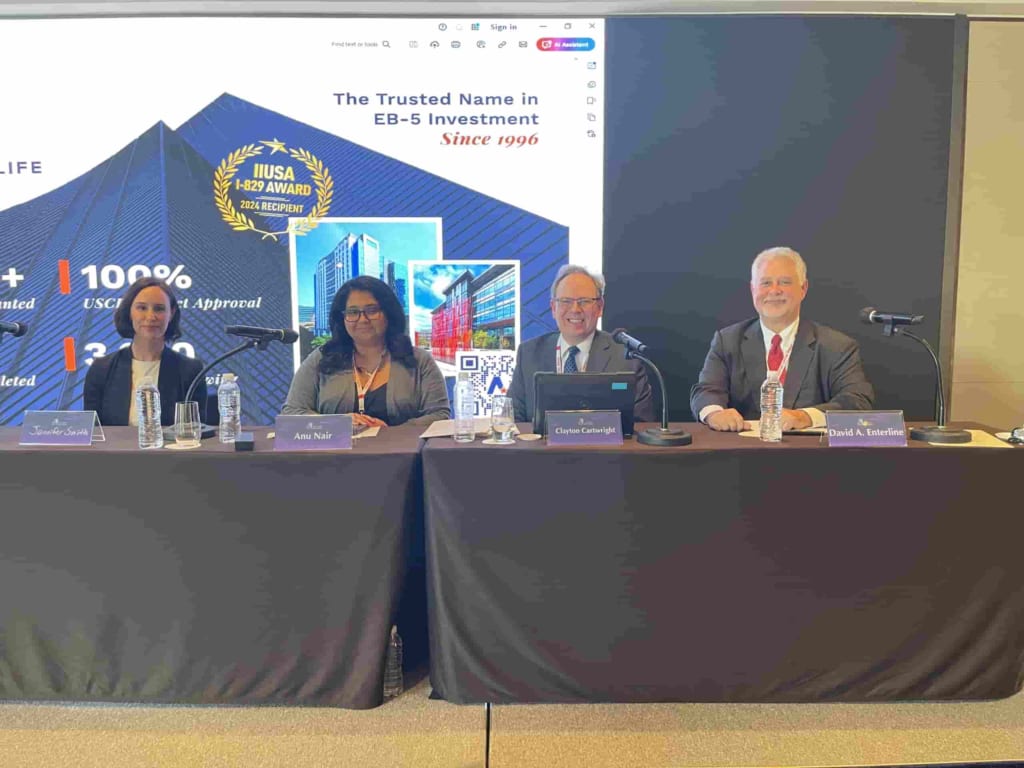
2025-APAC-Conference_EB-5-Panel
Mr. David Enterline in the 2025 American Immigration Lawyers Association (“AILA”), Asia Pacific Chapter (“APAC”) Annual Conference in Seoul, South Korea (far right)


David Enterline was the discussion leader of the EB-5 Panel titled “EB-5 State of Play Under the New Administration”.  Along with important challenges like I-485 processing delays, USCIS receipt number issues, visa rollover concerns, and ongoing litigation—including IIUSA’s challenge to USCIS’s sustainment policy and the Battineni v. Mayorkas ruling regarding EB-5 fund sourcing requirements—the topics covered included the encouraging rise in I-526/I-526E and I-829 petition approvals. Updates on tax planning, concurrent filing tactics and other topics were also discussed.
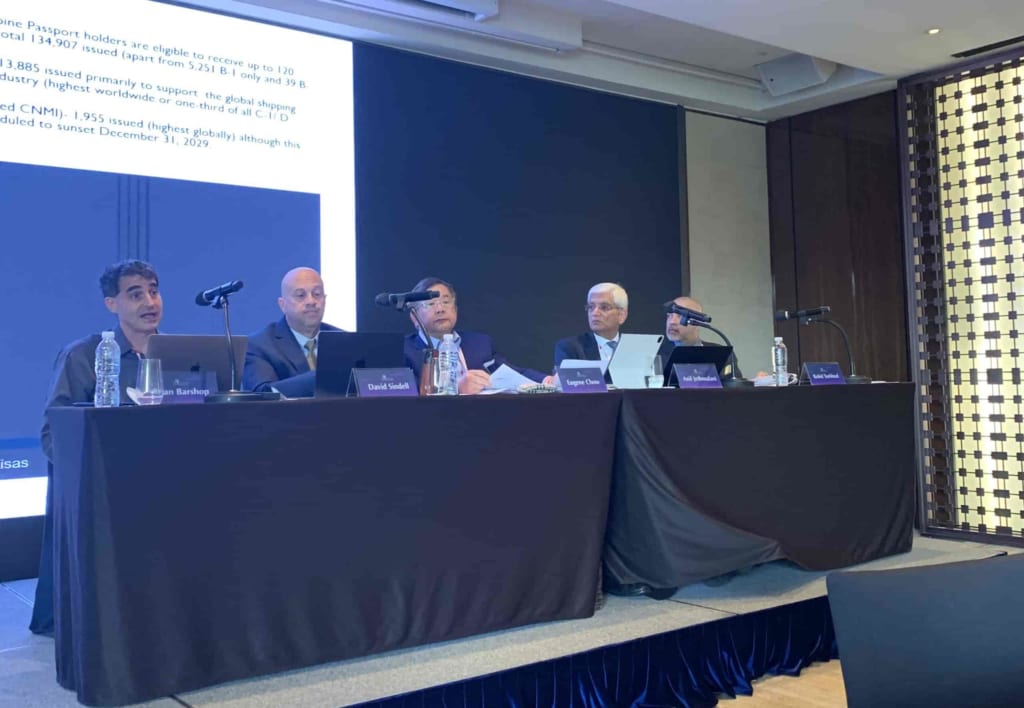
APAC-Ryan
Mr. Ryan Barshop in the 2025 American Immigration Lawyers Association (“AILA”), Asia Pacific Chapter (“APAC”) Annual Conference in Seoul, South Korea (far left)

On the panel “Live from the Trenches with Consular Post Experts in our APAC Region”, Ryan Barshop was one of the featured speakers. The event’s topics included advice on how to handle visa procedures at U.S. Embassies and Consulates throughout Asia. During a lively and interactive discussion, Ryan provided fellow practitioners with invaluable information by sharing regional trends and practical ideas based on his experiences in Vietnam and the Philippines.


United States immigration attorneys from the United States and the Asia-Pacific region gather for the annual AILA APAC Conference held in a different location in East and South-East Asia to share ideas, policy updates, and cross-border tactics. Enterline & Partners is pleased to participate in these significant debates and to continue to be a part of the international immigration law community.

If you have U.S. visa or immigration questions, contact us at info@enterlinepartners.com.

ENTERLINE & PARTNERS CONSULTING   

Ho Chi Minh City, Vietnam Office   

146C7 Nguyen Van Huong St, Thao Dien Ward,   
District 2, Thu Duc City   
Ho Chi Minh City, Vietnam   

Tel: +84 933 301 488   
Email: info@enterlinepartners.com   
Facebook: Enterline & Partners – Dịch vụ Thị thực và Định cư Hoa Kỳ   
YouTube: @EnterlineAndPartnersConsulting   
Website: https://enterlinepartners.com   

Manila, Philippines Office   

LKG Tower 37th Floor  
6801 Ayala Avenue   
Makati City, Philippines 1226   

Tel: +63 917 543 7926   
Email: info@enterlinepartners.com   
Facebook: Enterline and Partners Philippines   
Website: https://enterlinepartners.com/en/home/   

Copyright 2025. This article is for information purposes only and does not constitute legal advice. This article may be changed with or without notice. The opinions expressed in this article are those of Enterline & Partners only.


CATEGORY
time
recent posts
CTA_Collection

contact us today for more information

Latest News

Are K-1 Fiancé(e) Visas Affected by Trump’s 2025 Immigration Policies?

With the return of the Trump administration in 2025, many couples are asking the critical question: “Are K-1 Fiancé(e) visas (hereinafter “fianc(é)”)   affected by Trump’s new immigration policies?” While there is currently no outright ban on K-1 fianc(é) visas, applicants should be prepared for significant changes in processing, increased scrutiny, and potential delays. Following the precedents set during Trump’s previous term and recent executive orders in early 2025, the landscape for family-based immigration, including the K-1 visa, is shifting. Understanding these changes is vital for a successful application. Current Status of K-1 Visas in 2025 As of now, the K-1 fianc(é) visa program remains active. It has not been suspended. However, the administration’s focus on heightened security and “extreme vetting” is already impacting how these visas are processed. Unlike immigrant visas, K-1 visas are technically classified as nonimmigrant visas by the Department of State, even though they are treated

Read more >

Infrastructure Project, Rural Area, And Targeted Employment Area In The RIA

In the EB-5 Reform and Integrity Act of 2022 (“RIA”), three important terms are Infrastructure Project, Rural Area, and Targeted Employment Area (“TEA”). Here’s a clear explanation of each: Infrastructure Project An infrastructure project refers to a capital investment project administered by a governmental entity, such as a federal, state, or local agency. It typically involves a job-creating entity that works with a new commercial enterprise to receive capital investments from EB-5 investors. These projects are characteristically for improving public infrastructure with the added benefit of creating jobs and helping to stimulate local economic growth. Rural Area According to EB-5 regulation, areas that are within the geographic boundaries of a metropolitan statistical area are not eligible for the rural area designation, ensuring that the rural area classification is applied to regions that outside metropolitan zones and truly rural. A Rural Area excludes areas within the boundaries of cities or towns

Read more >

What is a Priority Date in U.S. Immigration? A Complete Guide to the Priority Date in U.S. Immigration

The priority date in U.S. immigration is a critical concept for anyone waiting for lawful permanent residency status (“Green Card”).  Because Congress sets strict annual limits on the number of immigrant visas issued in most categories, demand often outstrips supply, creating significant backlogs. Your priority date effectively acts as your “place in line” in this complex government queue. This priority date is established when the United States Citizenship and Immigration Services (“USCIS”) receives your initial petition, either the Form I-130 (for family-sponsored cases) or the Form I-140 or Labor Certification (for employment-based cases) or Form I-526/I-526E (for investor cases). Think of it as the timestamp on your ticket; until your number is called based on this date, you cannot move forward to the final stage of the immigration process. Understanding how the USCIS priority date works is vital for managing your expectations, planning your life during the wait, and knowing

Read more >
Zalo
Phone
WhatsApp
Messenger
Messenger
WhatsApp
Phone
Zalo