Enterline & Partners Consulting | info@enterlinepartners.com

DOS Provides Update on Public Charge Inadmissibility Following Temporary Injunction

DOS Provides Update on Public Charge Inadmissibility Following Temporary Injunction

Following a nationwide injunction issued by a federal judge temporarily blocking Public Charge inadmissibility from being enforced due to the COVID-19 pandemic, the United States Department of State (“DOS”) will be updating its guidance to consular officers on how to proceed while the injunction remains in effect. In the interim, DOS will not be requiring visa applicants to submit a DS 5540 Public Charge Questionnaire. Visa applicants are further requested not to take any additional steps at this time and should proceed for interviews as scheduled.

Immigrant and nonimmigrant visa applicants in East and Southeast Asia who have questions on the temporary injunction and Public Charge inadmissibility may contact us at info@enterlinepartners.com and speak with a U.S. immigration attorney based in Ho Chi Minh City, Manila and Taipei.

ENTERLINE & PARTNERS CONSULTING

Ho Chi Minh City, Vietnam Office
Suite 601, 6th Floor
Saigon Tower
29 Le Duan Street
Ben Nghe Ward, District 1
Ho Chi Minh City, Vietnam
Tel: +84 933 301 488
Email: info@enterlinepartners.com
Facebook: Enterline & Partners – Dịch vụ Thị thực và Định cư Hoa Kỳ
Website: http://enterlinepartners.com

Manila, Philippines Office
Unit 2507 Cityland 10 Tower 1
156 H.V. Dela Costa Street
Makati City, Philippines 1209
Tel: +632 5310 1491
Email: info@enterlinepartners.com
Facebook: Enterline and Partners Philippines
Website: https://enterlinepartners.com/language/en/welcome/

Copyright 2020. This article is for information purposes only and does not constitute legal advice. This article may be changed with or without notice. The opinions expressed in this article are those of Enterline and Partners only.
CATEGORY
time
recent posts
CTA_Collection

contact us today for more information

Latest News

F4 Visa Bulletin Update: Waiting Time for Family-Based Sibling Immigration

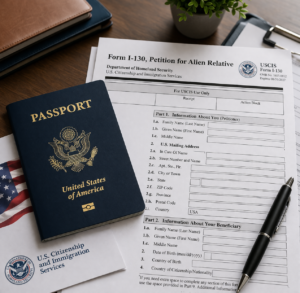
The U.S. immigration system provides a specific pathway for U.S. citizens to sponsor their siblings for lawful permanent residency (“Green Card.”) The Family-Based Fourth Preference (F4) category is dedicated to the brothers and sisters of adult U.S. citizens ages twenty-one (21) and above. While this is a popular route for family reunification, the F4 category visa waiting time is historically the longest in the system due to annual caps and high global demand. How the Wait Time is Shown on the U.S. Visa Bulletin The wait time for an immigrant visa in the F4 category is determined by the United States Department of State’s Visa Bulletin. The Visa Bulletin lists the priority date for each preference category, which is the date on which the United States Citizenship and Immigration Services (“USCIS”) received the Form I-130 Petition for Alien Relative (“Form I-130”) filed by the U.S. Citizen petitioner on behalf of

Read more >

The U.S. EB-5 Immigrant Investor Regional Center Program: History, Temporary Status, and Expiration Timeline

The EB-5 Reform and Integrity Act of 2022 (“RIA”) reauthorized and reformed the EB-5 Immigrant Investor Program, a U.S. immigration program that offers foreign nationals a pathway to U.S. permanent residency through investment in American businesses that create jobs. A significant component of this program is the EB-5 Immigrant Investor Regional Center Program, which allows investors to consolidate their resources through designated Regional Centers and invest in projects that drive economic growth and job creation. The Regional Center Program was introduced by Congress in 1992 as a pilot program to enhance the EB-5 visa classification. It was classified as a pilot program – a short-term “test” program – to allow for more flexibility for job creation based on the minimum investment.  Investments may be made into businesses or “projects” sponsored by Regional Centers, which are approved by the United States Citizenship Immigration Services.  Typically, these Regional Centers manage or oversee

Read more >

Vietnamese Names Listed in a Different Order on U.S. Visas and Green Cards

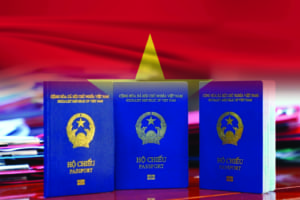
United States government posts have frequently listed Vietnamese citizens’ names on government documents in a different order such as on visas and Form I-551 (“Green Cards”.) This often happens because Vietnamese passports list names in the order of last name (or “family name” or “surname”) followed by the middle name and then the first name. This traditional naming style can cause significant confusion regarding the proper Vietnamese visa name order. Moreover, some Vietnamese individuals have more than one middle or first name, resulting in four names represented on a passport, which further complicates the data entry for U.S. officials. Regional Accuracy: Why Where You Apply Matters For U.S. government posts in Vietnam, such as the U.S. Consulate in Ho Chi Minh City and the U.S. Embassy in Hanoi, this is usually not a problem. Immigrant and nonimmigrant visas issued by these offices are normally correct because the consular officers have

Read more >
Zalo
Phone
WhatsApp
Messenger
Messenger
WhatsApp
Phone
Zalo