For many Vietnamese and American couples, marrying is an important decision. One important question is where to get married.
Deciding where to marry can shape your immigration timeline, your ability to live together, and even whether your immigration case succeeds.
Many couples face the same dilemmas.
- Marriage in Vietnam will allow you to celebrate with family and honor important traditions, while it may result in a longer U.S. immigration processing.
- Marriage in the United States can reunite couples quicker but it comes with higher costs and longer waiting periods.
At Enterline and Partners, we regularly advise couples navigating these choices, including those working with an immigration attorney in Vietnam while planning their future in the United States.
In this article, we’ll explain the pros, cons, timelines, and risks of each option to help you choose the path that best fits your priorities and avoid costly immigration mistakes.
Option 1: Registering Your Marriage in Vietnam Followed By Sponsoring Your Vietnamese Spouse for Immigration
Registering your marriage in Vietnam allows you to marry first and then begin the U.S. immigration process from abroad.
How the Process Works
When a U.S. citizen and a Vietnamese national marry in Vietnam, the marriage must be registered with Vietnamese authorities before it can be recognized for U.S. immigration purposes.
The process generally involves the following:
- The U.S. citizen traveling to Vietnam;
- Preparing and submitting extensive documentation to the local People’s Assembly, including:
- Passport and birth certificate;
- Evidence of lawful marital status;
- Affidavit of Single Status (often notarized and authenticated);
- Translations and local verifications.
- Completing interviews and administrative review in Vietnam;
- Issuance of a Vietnamese Marriage Certificate.
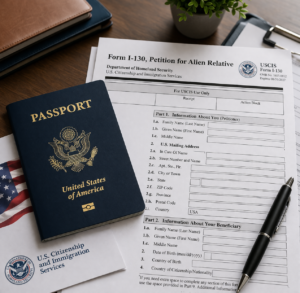
Once the marriage is legally registered, the U.S. citizen may file a Form I-130, Petition for Alien Relative (“Form I-130”) to begin the spousal immigration petition with the United States Citizenship and Immigration Services (“USCIS”).
Immigration Visa Category
A U.S. citizen sponsoring a Vietnamese spouse uses one of the following immigrant visa categories:
- CR-1: Conditional Resident Visa (married less than two years);
- IR-1: Immediate Relative Visa (married two years or more).
Both categories lead directly to lawful permanent residence (“Green Card.”)
Timeline Expectations
The USCIS is currently adjudicating the majority of Form I-130 cases within seventeen (17) months depending on government workload and case complexity. Note however that this waiting time can often change.
Pros of Marrying in Vietnam
- Ability to hold a full wedding celebration with family present;
- Marriage recognized immediately by Vietnamese authorities;
- Upon entry to the U.S., the sponsored spouse arrives and becomes a lawful permanent resident ;
- Right to work immediately after arrival;
- No need for adjustment of status after entry.
Cons of Marrying in Vietnam
- Longer separation while waiting for a Form I-130 approval and consular processing;
- Complex marriage registration process;
- Multiple government offices involved in Vietnam;
- Delays if documentation is incomplete or inconsistent.
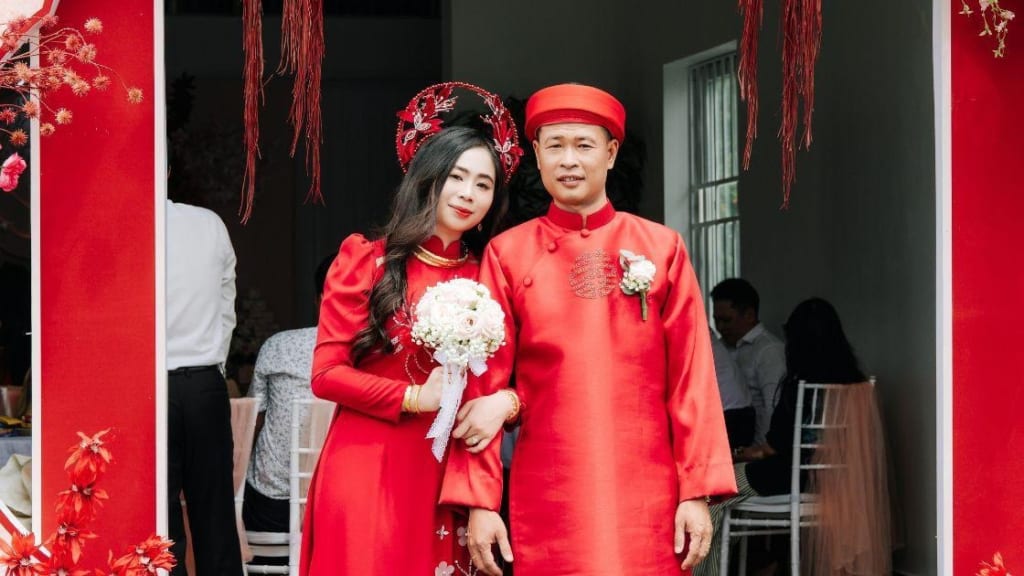
A couple weds at a traditional ceremony.
Option 2: Marriage in the U.S. Through a K-1 Fiancé(e) Visa
This option allows couples to reunite in the United States first and complete the marriage under U.S. law.
How the Process Works
The K-1 fiancé(e) visa allows a Vietnamese fiancé(e) of a U.S. citizen to enter the United States for the purpose of marriage.
The process typically includes:
- Filing a Form I-129F Petition for Alien Fiancé(e) ,(“Form I-129F”);
- Consular interview and visa issuance abroad;
- Entry into the U.S. on a K-1 visa;
- Mandatory marriage within 90 days of entry;
- Filing for Adjustment of Status (“AOS”) to obtain a lawful permanent residence.
Failure to marry the sponsoring U.S. citizen within 90 days requires the Vietnamese national to depart the United States.
Timeline Expectations
K-1 visas often allow couples to reunite quicker than petitions for spouses because sometimes the Form I-129F is approved quicker than a Form I-130. However, the process does not end at entry. The AOS process with USCIS can take many additional months after marriage.
Pros of the K-1 Visa Option
- Sometimes faster physical reunion in the United States;
- Simpler marriage procedures under U.S. law;
- Allows couples to begin life together quicker;
- Useful when extended separation is not feasible.
Cons of the K-1 Visa Option
- Higher total cost (K-1 filing fees + AOS fees);
- Additional cost and additional steps to remove the “condition” from the spouses lawful permanent resident status 2 years after adjustment;
- No Green Card soon after arrival;
- Cannot work or travel immediately after entry;
- To work and travel, must apply separately for:
- Employment Authorization Document (“EAD”)
- Advance Parole for travel;
- Strict compliance required with the 90-day marriage rule;
The “Shortcut” Option: Tourist Visa Marriage — And Why It’s Risky
Some couples consider having the foreign spouse enter the U.S. on a B-1/B-2 Visitor Visa (“Tourist Visa”) and then marry, hoping to adjust status without leaving the United States.
Why This Can Be Dangerous
United States immigration law prohibits misrepresentation and visa fraud when applying for a visa, entering the United States or seeking another U.S. immigration benefit If a person applies for a Tourist Visa while secretly intending to enter the U.S., marry and remain permanently, immigration officers may view this as preconceived intent.
If the Customs and Border Protection Agency has any suspicion that the Vietnamese national arriving in the United States has plans to file for AOS after being married on a Tourist Visa, they may have their visa revoked at the Port-of-Entry, which could result in a temporary or possibly lifetime ban from the United States.
An immigration officer might also come to this conclusion during an AOS interview.
If USCIS determines fraud occurred while applying for AOS on a Tourist Visa, or entering the U.S. with preconceived intent, consequences may include:
- Denial of the lawful permanent resident application;
- Revocation of current visa status;
- Deportation;
- Permanent inadmissibility to the United States.
Even marriages entered in good faith can face scrutiny if timing suggests prior intent.
Professional Guidance Matters
Talking to a U.S. immigration attorney before taking any steps can help you understand the risks and avoid actions that could jeopardize your future immigration options.

A couple reunites at the airport.
Comparison: Marriage in Vietnam vs. Marriage in the United States
Each option offers distinct advantages and disadvantages, as shown in the comparison below.
| Criteria | Marriage in Vietnam (CR-1 / IR-1) | Marriage in the U.S. (K-1) |
| Reunion time | Longer (wait abroad) | Faster (enter U.S. quicker) |
| Total cost | Lower overall | Higher (multiple filings and fees) |
| Status at U.S. Entry | Permanent Resident | Nonimmigrant |
| Work authorization | Immediate | Must apply for EAD |
| Post-entry filings | None | Adjustment of Status required |
| Additional Filing | None | Remove Condition after 2 years |
| Risk Level | Lower | Higher if deadlines missed |
Factors to Consider When Choosing the Best Path
Before deciding to register your marriage in the U.S. or Vietnam, it helps to weigh several practical and legal factors, including the following:
Time vs. Stability
If being together as soon as possible is your top priority, the K-1 route may feel appealing. If long-term security and fewer filings matter more, marriage in Vietnam often provides greater stability.
Financial Considerations
K-1 visas beginning with a Form I-129F involve multiple filing fees, medical exams, and follow-up applications. A petition for a spouse starting with a Form I-130 typically costs less overall.
Couples should also consider indirect costs, such as travel, time off work, and the financial impact of delayed employment authorization.
Employment Needs
If the Vietnamese spouse needs to work immediately upon arrival, a CR-1 or IR-1 visa provides that benefit. K-1 entrants must wait for employment authorization, which can affect income, career continuity, and access to employer benefits.
Family and Cultural Priorities
Some couples value celebrating marriage in Vietnam with extended family and traditions. Others prefer a small ceremony in the U.S. with plans for later celebrations.
Cultural expectations, family involvement, and personal preferences often play a significant role in this decision.
Choosing the Right Marriage and Immigration Strategy
There is no universal answer to whether a couple should marry in the United States or Vietnam. The right choice depends on your timeline, finances, work needs, tolerance for legal complexity, and many other factors.
Each option carries legal obligations, deadlines, and risks. A decision made without proper planning can delay reunification or jeopardize immigration eligibility altogether.
If you are unsure which path fits your situation, Enterline and Partners can help. Our team works with Vietnamese-American couples worldwide to evaluate marriage-based immigration options, prepare compliant filings, and avoid preventable mistakes.
Contact us today for a case evaluation to determine the most effective and legally sound strategy for your future together. You can also visit us at our Ho Chi Minh City, Vietnam office for in-person assistance.
ENTERLINE & PARTNERS CONSULTING
Ho Chi Minh City, Vietnam Office
Level 6 & 7, Friendship Tower, 31 Le Duan Street, Sai Gon Ward
Ho Chi Minh City, Vietnam
Tel: +84 933 301 488
Email: info@enterlinepartners.com
Facebook: Enterline & Partners – Dịch vụ Thị thực và Định cư Hoa Kỳ
YouTube: @EnterlineAndPartnersConsulting
Website: https://enterlinepartners.com
Manila, Philippines Office
LKG Tower 37th Floor
6801 Ayala Avenue
Makati City, Philippines 1226
Tel: +63 917 543 7926
Email: info@enterlinepartners.com
Facebook: Enterline and Partners Philippines
Website: https://enterlinepartners.com/en/home/
Copyright 2026. This article is for information purposes only and does not constitute legal advice. This article may be changed with or without notice. The opinions expressed in this article are those of Enterline and Partners only.