Enterline & Partners Consulting | info@enterlinepartners.com

Qualifying for I-130 Expedited Processing Based on Exceptional Circumstances for U.S. Citizens Living Abroad

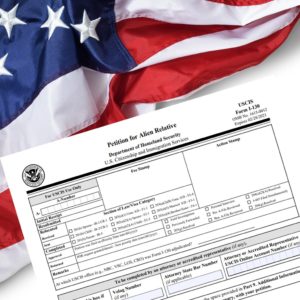
In exceptional circumstances, a U.S. citizen who is living abroad with his or her foreign spouse and would like to bring his or her foreign spouse to the United States on an immigrant visa may be able to avail of I-130 expedited processing.

Exceptional circumstances may include the following:

Military emergencies. A U.S. service member abroad becomes aware of his or her new deployment or transfer with very little notice.
  • Medical emergencies. The U.S. citizen or foreign spouse is faced with an urgent medical emergency that requires immediate travel.
  • Threats to personal safety. The U.S. citizen or foreign spouse is faced with an imminent threat to his or her personal safety.
  • Short-term notice of position relocation. The U.S. citizen spouse who has been living and working abroad receives a job offer to be transferred back to the United States.

While this is not an exhaustive list of examples, a request for exceptional circumstances must first be made with the U.S. Citizenship and Immigration Services (USCIS) district office or the U.S. Consulate where the U.S. and foreign spouse reside. The USCIS district office that has jurisdiction over the place of residence will in turn approve or refuse the request. If the district office approves the request and subsequent petition, the matter will forward it to the nearest U.S. Embassy or Consulate for the visa application process. If the request is refused, there is no right of appeal or reconsideration request but the U.S. citizen spouse can still file the immigrant petition with the USCIS in the United States.

By qualifying for the I-130 expedited processing, we can reduce your waiting time to immigrate from approximately 12 to 18 months down to as little as 5-6 weeks. We have processed many such expedited petitions so contact us if you are interested at info@enterlinepartners.com and speak with one of our experienced U.S. immigration attorneys.

ENTERLINE & PARTNERS CONSULTING
Ad: 3F, IBC building, 1A Cong Truong Me Linh Str, District 1, HCMC.
Tel: 0933 301 488

CATEGORY
time
recent posts
CTA_Collection

contact us today for more information

Latest News

Infrastructure Project, Rural Area, And Targeted Employment Area In The RIA

In the EB-5 Reform and Integrity Act of 2022 (“RIA”), three important terms are Infrastructure Project, Rural Area, and Targeted Employment Area (“TEA”). Here’s a clear explanation of each: Infrastructure Project An infrastructure project refers to a capital investment project administered by a governmental entity, such as a federal, state, or local agency. It typically involves a job-creating entity that works with a new commercial enterprise to receive capital investments from EB-5 investors. These projects are characteristically for improving public infrastructure with the added benefit of creating jobs and helping to stimulate local economic growth. Rural Area According to EB-5 regulation, areas that are within the geographic boundaries of a metropolitan statistical area are not eligible for the rural area designation, ensuring that the rural area classification is applied to regions that outside metropolitan zones and truly rural. A Rural Area excludes areas within the boundaries of cities or towns

Read more >

What is a Priority Date in U.S. Immigration? A Complete Guide to the Priority Date in U.S. Immigration

The priority date in U.S. immigration is a critical concept for anyone waiting for lawful permanent residency status (“Green Card”).  Because Congress sets strict annual limits on the number of immigrant visas issued in most categories, demand often outstrips supply, creating significant backlogs. Your priority date effectively acts as your “place in line” in this complex government queue. This priority date is established when the United States Citizenship and Immigration Services (“USCIS”) receives your initial petition, either the Form I-130 (for family-sponsored cases) or the Form I-140 or Labor Certification (for employment-based cases) or Form I-526/I-526E (for investor cases). Think of it as the timestamp on your ticket; until your number is called based on this date, you cannot move forward to the final stage of the immigration process. Understanding how the USCIS priority date works is vital for managing your expectations, planning your life during the wait, and knowing

Read more >

USCIS To Implements the 2025 Naturalization Civics Test

The U.S. Citizenship and Immigration Services (“USCIS”) has announced an update to its Policy Manual that re-introduces a modified version of the 2020 Civics Test—now called the 2025 Naturalization Civics Test. The update, once adopted, will apply to applications for naturalization (Form N-400 Application for Naturalization) filed on or after October 20, 2025, and aims to reinforce the importance of civic knowledge, assimilation into the U.S. society, an understanding of the Constitution, laws, and founding principles of the United States. Why This Change Matters Naturalization is the process by which lawful permanent residents become U.S. citizens—gaining full rights and responsibilities in American society. Under Section 312 of the Immigration and Nationality Act (“INA”), most applicants must demonstrate both proficiency in the English language and knowledge of U.S. civics and government. The USCIS notes that strengthening these requirements is part of its broader goal to ensure that new citizens are well-prepared

Read more >
Zalo
Phone
WhatsApp
Messenger
Messenger
WhatsApp
Phone
Zalo