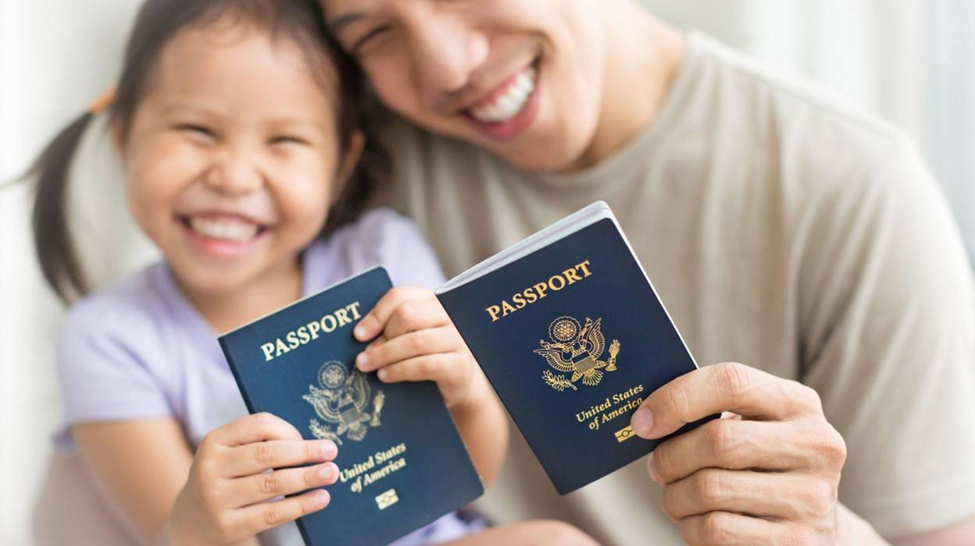
Learn who can you sponsor as a U.S. citizen for family-based visas. While the U.S. family-based immigration system offers a way for U.S. citizens and lawful permanent residents (“Green Card Holders”) to sponsor relatives, not everyone can be a sponsor and not all family members qualify.
In this guide, we will explain cases where a sponsor can or cannot sponsor a family member to immigrate to the U.S., and why obtaining trusted legal advice is an essential first step in family immigration.
Who Can You Sponsor As a US Citizen?
To sponsor a family member, you must meet certain requirements set by the United States Citizenship and Immigration Services (“USCIS”).
Sponsorship is typically available to U.S. citizens and lawful permanent residents (“Green Card Holders”), but who can a U.S. citizen sponsor for a green card also depends on your relationship to the individual family member.
You may be eligible to sponsor a family member if you are a U.S. citizen sponsoring your:
- Spouse;
- Child (any age, married or unmarried);
- Parent;
- Sibling.
Green Card Holders are eligible to sponsor a spouse or an unmarried child of any age.
All sponsors must be at least 21 years of age, live or intend to live in the United States and agree to support the family member financially by submitting a Form I-864 Affidavit of Support. Keep in mind that meeting these requirements does not guarantee approval. Each case is reviewed by USCIS, and other eligibility factors may apply. If you’re unsure about your situation, you can reach out to us for guidance.

Which Family Members Cannot Be Sponsored for U.S. Immigration?
Non-qualifying family members consist of the following:
- Aunts, uncles, cousins, or grandparents;
- In-laws (mother-in-law, father-in-law, daughter-in-law, etc.);
- Fiancé(e), unless you are using a K-1 visa (which is a separate process and not a green card sponsorship);
- Stepchildren, if the stepparent/stepchild relationship was created after the stepchild turned 18 years of age;
- Stepparents, if your biological parent married them after the Sponsor turned 18 years of age;
- Adopted children, if the adoption was finalized after the child turned 16 years of age.
Individuals with a Criminal History
Criminal history can affect both the Sponsor and the family member in a family-based immigration case.
For Sponsors, having a criminal record doesn’t always mean you’re ineligible to file a petition although certain offenses can prevent you from sponsoring a family member.
For example, under the Adam Walsh Child Protection and Safety Act, individuals who have committed specific sex offenses or crimes against minors are generally barred from filing a petition unless they can prove they pose no risk to the family member they’re sponsoring. This exception is rare and requires strong evidence.
For the family member(s), the standards are much stricter. A person may be refused even if they were never convicted of a crime. An arrest, an admission of guilt, or involvement in certain offenses may be enough to make someone “inadmissible.”
Specifically, Crimes Involving Moral Turpitude (“CIMT”), which are offenses demonstrating dishonesty, or intentional harm to others are considered quite serious under immigration law because they reflect poor moral character which render the family member inadmissible to immigrate to the United States
Examples of CIMT include the following:
- Theft or fraud;
- Drug trafficking or serious drug offenses;
- Assault with intent to harm;
- Prostitution-related offenses.
In limited cases, a waiver of inadmissibility may be available but approval depends on the nature of the offense and other factors. In the event that a waiver is needed, legal representation is strongly recommended.

What To Do If You’re Not Eligible to Sponsor or Be Sponsored for a Family-Based U.S. Visa?
If sponsorship is not legally possible, there may be other avenues available. These possible options include the following:
- Employment-Based Immigration (EB-2, EB-3): For individuals with job offers in the U.S., especially in fields requiring specialized skills, advanced degrees, or labor shortages.
- Investment-Based Immigration (EB-5): For individuals who can invest $800,000–$1,050,000 in a U.S. business and create or preserve at least 10 full-time jobs for U.S. workers.
- Treaty Trader and Treaty Investor (E-1 and E-2): For individuals who are citizens of treaty-member countries and can invest a substantial amount of money in setting and running a brick-and-mortar business which creates at least 1 full-time job.
- L-1 Intracompany Transfer (L-1): For individuals who are citizens of non-treaty member countries and have been working for an existing business abroad for at least 1 year and would like to be transferred to the U.S. business entity.
Because each case is unique, choosing the right path depends on qualifications, goals, financial resources and timeline. In any case, working with an experienced immigration attorney can help you avoid dead ends and build a clear, strategically tailored plan.
FAQs About Sponsorship for U.S. Immigration
How many times can you sponsor someone in the U.S.?
There is no strict limit to how many times a U.S. citizen or lawful permanent resident can file family sponsorship petitions. However, you must meet financial sponsorship requirements for each case, and the U.S. government may review your history of sponsorships carefully if you have filed many.
When can a U.S.-born child sponsor parents?
A U.S.-born child may petition for their parents once they turn 21 years old. The parent must also be admissible to the U.S. and meet all immigration requirements.
Who can a U.S. citizen sponsor for a green card?
U.S. citizens can sponsor their spouse, children (married or unmarried), parents (if the citizen is at least 21), and siblings. Extended family members, such as cousins, grandparents, or in-laws, are not eligible.
At what age can a U.S. citizen sponsor parents?
A U.S. citizen must be at least 21 years old to sponsor a mother or father for permanent residence.
How can I sponsor my friend to the U.S.?
Unfortunately, U.S. immigration law does not allow citizens to directly sponsor friends for green cards. However, friends may visit through a visitor visa (B-2), or sometimes employment or student visas if they qualify. You may write a letter of invitation or provide financial support, but it is not the same as a sponsorship petition.
Contact an Experienced Immigration Lawyer Today
At Enterline and Partners, we know that no two cases are alike. Our experienced team will take the time to understand your situation, help you explore every possible avenue, and provide step-by-step support.Contact us today to get started.
ENTERLINE & PARTNERS CONSULTING
Ho Chi Minh City, Vietnam Office
146C7 Nguyen Van Huong St, Thao Dien Ward,
District 2, Thu Duc City
Ho Chi Minh City, Vietnam
Tel: +84 933 301 488
Email: info@enterlinepartners.com
Facebook: Enterline & Partners – Dịch vụ Thị thực và Định cư Hoa Kỳ
YouTube: @EnterlineAndPartnersConsulting
Website: http://enterlinepartners.com
Manila, Philippines Office
LKG Tower 37th Floor
6801 Ayala Avenue
Makati City, Philippines 1226
Tel: +63 917 543 7926
Email: info@enterlinepartners.com
Facebook: Enterline and Partners Philippines
Website: https://enterlinepartners.com/language/en/welcome/
Copyright 2025. This article is for information purposes only and does not constitute legal advice. This article may be changed with or without notice. The opinions expressed in this article are those of Enterline and Partners only.