Reuniting families is one of the most meaningful aspects of the U.S. immigration system. While sponsoring a family member is a common path, the timeline can vary considerably depending on the visa category, your relationship to the beneficiary, and your own immigration status.
Having a better idea of how long does it take to sponsor a family member can help you plan ahead and avoid unnecessary stress – even small mistakes in the application process can lead to significant delays or denials, making an already emotional process even more difficult.
At Enterline and Partners, our immigration attorneys guide family-based clients through every step – whether you’re sponsoring a fiancé(e) through a K-1 visa, a spouse through CR-1/IR-1, or another family member entirely. This guide breaks down current wait times for 2026, what affects your timeline, and how to avoid common setbacks.
Typical Timelines for Sponsoring a Family Member to the United States.
One of the most common questions our clients ask us is how long does it take to sponsor a family member to the United States from beginning to end?
As of 2025, the United States Citizenship and Immigration Services (“USCIS”) is processing Form I-130 Petitions for Alien Relatives in as little as seventeen (17) months as seen below:
- U.S. citizens sponsoring a spouse or minor child (IR category): 12–18 months
- U.S. citizens sponsoring a parent: 12–20 months
- U.S. citizens sponsoring a sibling (F4 category): 13–25 years (This is one of the longest wait times due to annual visa quotas and per country caps on visa numbers.)
- Lawful Permanent Residents sponsoring a spouse or child: 24–36 months
Following USCIS approval, additional time is required for National Visa Center (“NVC”) processing and the final interview at a U.S. Embassy or Consulate.
Processing times can vary and change at any time.
To avoid delays, our experienced immigration attorneys are here to guide you through each step of the sponsorship process. We will help make sure your application is complete, accurate, and timely submitted.
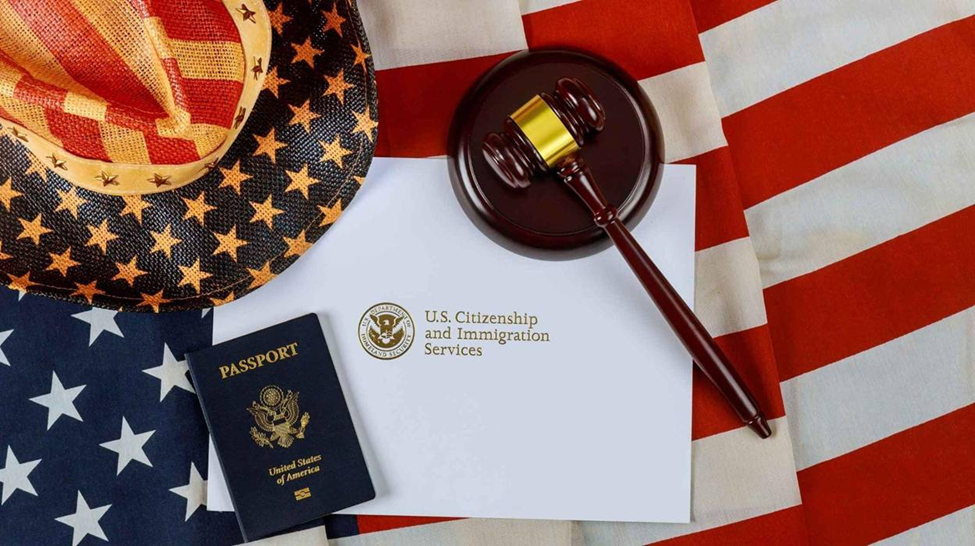
A letter from the USCIS and a U.S. passport
Factors That Can Affect Sponsorship Timelines
Several key factors influence how long does it take to sponsor family members to the United States, including but not limited to the following:
- Sponsor’s Immigration Status: U.S. citizens generally experience faster processing times than lawful permanent residents (“Green Card Holders”). For example, a U.S. citizen sponsoring a spouse will usually have a shorter wait than a Green Card Holder doing the same.
- Beneficiary’s Citizenship: Processing times can be longer for beneficiaries that are citizens of countries with higher demand for U.S. family visas such China, Mexico, the Philippines, or India.
- USCIS and NVC backlogs: Delays can occur when there are high volumes of petitions processed through USCIS or the National Visa Center. These backlogs often fluctuate due to things like policy changes, staffing levels, and global events.
- Mistakes or Incomplete Applications: Errors on forms, missing documents, or failure to meet filing requirements can cause your case to be rejected or significantly delayed.
By being aware of these factors early on, steps can be taken to avoid common delays and keep the process running smoothly.
Typical Timelines for Sponsoring a Family Member to the United States – 2026
One of the most common questions our clients ask is: how long does it take to sponsor a family member to the United States, from start to finish? The answer depends heavily on the visa category and your sponsor’s immigration status. Below is a realistic breakdown for 2026:
Visa Category Relationship Sponsor Estimated Timeline K-1 Fiancé(e) U.S. Citizen 9-18 months IR-1/CR-1 Spouse U.S. Citizen 11-20 months IR-2 Unmarried child under 21 U.S. Citizen 12-18 months IR-5 Parent U.S. Citizen (21+) 12-24 months F2A Spouse, child under 21 Green Card Holder 2-3 years F2B Unmarried child over 21 Green Card Holder 5-7 years F3 Married child U.S. Citizen 10-15 years F4 Sibling U.S. Citizen 15-20+ years Immediate Relative (IR) categories have no annual quota, which is why sponsoring a spouse or parent through these categories moves significantly faster than the Family Preference (F) categories, which are subject to strict annual caps.
Following USCIS approval, additional time is required for National Visa Center (NVC) processing and the final interview at a U.S. Embassy or Consulate. Processing times can vary and change at any time – our experienced immigration attorneys are here to guide you through each step and help make sure your application is complete, accurate, and timely.
Understanding Family-Based Immigration Categories
Family-based immigration is divided into two groups: Immediate Relatives (“IR”) and the Family-Based Preference (“FB”) categories.
Each category has different eligibility requirements, visa availability, and wait times which can significantly impact how long the overall sponsorship process takes to complete from filing the Form I-130 Petition with USCIS to visa issuance at an Embassy or Consulate.
Immediate Relative Categories
These visas are reserved for the closest family members of U.S. citizens and are not subjected to a worldwide quota which generally results in a faster processing time:
- IR-1/CR-1: Spouses of U.S. citizens;
- IR-2/CR-2: Unmarried children under 21 years of age of U.S. citizens;
- IR-5: Parents of U.S. citizens.
Family-Based Categories
These categories are subject to a worldwide quota which often means longer processing times.
- F1: Unmarried adult children (21 and above) of U.S. citizens;
- F2A: Spouses and unmarried children under 21 years of Green Card Holders;
- F2B: Unmarried adult children (21 years and above) of Green Card Holders;
- F3: Married children of U.S. citizens;
- F4: Siblings of U.S. citizens.
There is no category for married sons and daughters of Green Card Holders.

Siblings reuniting at the airport
How to Reduce Wait Times in U.S. Sponsorship Cases
While some delays are unavoidable, many can be prevented with careful planning and paying attention to detail. Here’s how you can help reduce wait times:
1. Ensure that the Forms Are Accurate and Complete
Errors on forms are one of the most common reasons cases are delayed. Be sure that all required documents, such as the Form I-130 Petition, the DS-260 Immigrant Visa Application, and the Form I-864, Affidavit of Support, are fully completed, signed, and submitted with the correct supporting documents.
2. Provide Strong Evidence of the Family Relationship
The USCIS and the NVC must be convinced that the family relationship is genuine and qualifies under immigration law. Submitting clear, consistent documents helps establish legitimacy. These may include:
- Birth certificates;
- Marriage records;
- Family photos;
- Shared life events.
Weak or incomplete evidence can lead to delays or denials, especially in high-scrutiny cases like spousal or sibling sponsorship.
3. Avoid Requests for Evidence
A Request for Evidence (“RFE”) can easily add 3 to 6 months or more to your case. An RFE is typically issued when USCIS uses its discretionary authority to determine that more documentation is needed before a decision can be issued. You can reduce the chance of receiving one by anticipating what the government will look for and providing complete, well-organized evidence at the initial petition filing stage.
4. Respond Quickly to Any USCIS or NVC Notices
If you do receive an RFE, Notice of Intent to Deny, or correspondence from the NVC, respond quickly and thoroughly. Delays in replying or submitting incomplete responses can push your case back in the queue or result in denial.
Always monitor your USCIS and NVC case status and act promptly on any required actions.
5. Work with a Trusted and Experienced U.S. Immigration Attorney
Trying to handle the process alone may increase your risk and result in costly mistakes. At Enterline and Partners, we help clients prepare clear, accurate applications that meet all legal requirements and avoid the common mistakes that cause delays.
You’ll also benefit from a personalized strategy based on your specific situation, including your relationship category, immigration history, and your family member’s citizenship.
Contact us today to schedule a personalized consultation with an experienced immigration attorney and take the next step toward reuniting with your loved one.
Frequently Asked Questions About Sponsoring a Family Member
How long after being sponsored can you sponsor someone?
It depends on your immigration status. Once you become a lawful permanent resident or U.S. citizen, you may sponsor eligible family members. There is no fixed waiting period after obtaining your green card or citizenship, but processing times vary by category and country of origin.
How long do you need to be sponsored to get PR?
The time it takes to get permanent residency (PR) after being sponsored depends on your relationship to the sponsor and your country of origin. For immediate relatives of U.S. citizens, processing typically takes 12–18 months. For other family-based categories, the wait can range from 2 to 15+ years due to annual visa limits and priority dates.
How long can I sponsor someone for?
Sponsorship obligations last until the sponsored person becomes a U.S. citizen, works 40 qualifying quarters (about 10 years), leaves the U.S. permanently, or passes away. In most cases, the financial responsibility is long-term, so sponsors should plan accordingly.
How long does it take to sponsor a spouse to the United States?
Sponsoring a spouse depends on your immigration status. U.S. citizens can choose between a K-1 fiancé visa (9-18 months) or CR-1/IR-1 spousal visa (11-20 months). Lawful permanent residents must file under the F2A category, which typically takes 2-3 years due to annual visa caps.
How long does it take to sponsor a parent?
Sponsoring a parent falls under the IR-5 category and is only available when the sponsor is a U.S. citizen 21 or older. Since IR-5 has no annual quota, processing is typically faster than other categories – generally 12-24 months. Green Card holders cannot sponsor parents.
Why does sponsoring a sibling take so long?
Sibling sponsorship falls under the F4 category, which has the lowest annual quota and highest demand of any family preference category. Wait times for F4 can exceed 15-20 years depending on the beneficiary’s country of birth, with countries like the Philippines, Mexico, and Vietnam often experiencing longer waits than the worldwide average.
What can I do to speed up the sponsorship process?
While you can’t bypass visa category quotas, you can avoid unnecessary delays by submitting a complete and accurate I-130 petition from the start, responding quickly to any USCIS requests, and tracking the Visa Bulletin monthly if your category is subject to annual caps. Working with an experienced immigration attorney significantly reduces the risk of processing delays caused by avoidable errors.
Can a lawful permanent resident sponsor the same family members as a U.S. citizen?
No. Green Card holders can only sponsor a spouse and unmarried children (F2A and F2B categories) – they cannot sponsor parents or siblings. U.S. citizens have access to all family-based categories, including Immediate Relative classifications that move significantly faster than the Family Preference categories available to LPRs.
ENTERLINE & PARTNERS CONSULTING
Ho Chi Minh City, Vietnam Office
Level 6 & 7, Friendship Tower, 31 Le Duan Street, Sai Gon Ward,
Ho Chi Minh City, Vietnam
Tel: +84 933 301 488
Email: info@enterlinepartners.com
Facebook: Enterline & Partners – Dịch vụ Thị thực và Định cư Hoa Kỳ
YouTube: @EnterlineAndPartnersConsulting
Website: https://enterlinepartners.com
Manila, Philippines Office
LKG Tower 37th Floor
6801 Ayala Avenue
Makati City, Philippines 1226
Tel: +63 917 543 7926
Email: info@enterlinepartners.com
Facebook: Enterline and Partners Philippines
Website: https://enterlinepartners.com/en/home/
Copyright 2025. This article is for information purposes only and does not constitute legal advice. This article may be changed with or without notice. The opinions expressed in this article are those of Enterline and Partners only.