Enterline & Partners Consulting | info@enterlinepartners.com

David Enterline Esq., and Ms. Tham Tran speak at GBI June Meeting

On June 24, 2019, Enterline and Partners Managing Partner David Enterline, and Mr. Tham Tran, Esq., were invited to join the June Meeting of GBI – Saigon Businessmen Club.

GBI club is an organization where business owners in Ho Chi Minh City gather to share their knowledge, business opportunities, and expand their social and business network. This club has approximately 30 members in multiple industries and services.

In the social event in June, David Enterline Esq., and Mr. Tham Tran were invited to join the meeting at The Unique restaurant in District 10, Ho Chi Minh City. Along with Ms. Tham, David shared with the attendees some information about what types of visas entrepreneurs would use for doing business or immigrating to the United States. In particular, Vietnamese investors and businesspersons might start with a B-1/B-2 visa for starting a business (the B-1 is for business) or an L-1 or E-2 for staying in the U.S. to manage a business. If an investor or business person wants to do business in the U.S. and also obtain permanent residence, then several other visas may be appropriate, such as the EB-1C for multinational managers and executives and of course the EB-5 immigrant investor visa. Finally, for some individuals with extraordinary abilities and talents in business, arts, science, education, or athletics, they may qualify for the EB-1 visa, or if they have exceptional ability in the science, arts or business, they may qualify for the EB-2 visa.

If you want to learn more information about the visa for investors/businessmen or talented people, contact us at:


ENTERLINE & PARTNERS CONSULTING
Ad: 3F, IBC building, 1A Cong Truong Me Linh Str, District 1, HCMC.
Tel: 0933 301 488
CATEGORY
time
recent posts
CTA_Collection

contact us today for more information

Latest News

Know Your Rights: What to Do if You Are Detained at a U.S. Port of Entry (for Lawful Permanent Residents)

Updated for 2025: Heightened Enforcement at Ports of Entry Like all international travelers, lawful permanent residents (LPRs)—also known as Green Card holders—are subject to inspection by U.S. Customs and Border Patrol (CBP) when arriving at an airport or land port of entry. While LPRs enjoy greater rights than nonimmigrants when returning to the United States after travel abroad, all noncitizens now face increased scrutiny at the border for past immigration issues, interactions with police, and political activity. It is important that you know your rights when returning to the United States. Secondary Inspection: If questions arise and CBP is unable to admit you quickly, you may be taken to a separate area for “secondary inspection.” Being sent for a secondary inspection by itself does not necessarily mean you are in trouble, but you may be held anywhere from a few minutes to several hours or longer. During secondary inspection, CBP

Read more >

What Questions Will the U.S. Consulate in Ho Chi Minh City Ask My Vietnamese Fiancé(e)?

When your Vietnamese fiancé(e) (“fiance’) undergoes his/ her interview at the U.S. Consulate in Ho Chi Minh City, the consular officer’s primary goal is to determine if your relationship is genuine and bona fide. While the exact K-1 visa interview questions vary based on the specific details of your case, the officer will focus on consistency and your fiancé(e)’s personal knowledge of your life together. Twenty Common K-1 Visa Interview Questions for 2026 To help you prepare, we have categorized the most frequent questions asked during the K-1 visa interview: Success at the Ho Chi Minh City Consulate The key to a successful K-1 visa interview is honesty and confidence. If the interviewing consular officer senses a lack of knowledge about basic life details, it could lead to a processing delay or a potential denial. You can stay up to date with the latest U.S. Visas News and updates impacting

Read more >

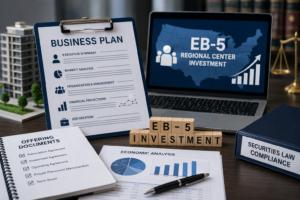
Establishment Of An EB-5 Regional Center

The EB-5 Reform and Integrity Act of 2022 (“RIA”) introduced significant changes to the EB-5 Immigrant Investor Program, including changes to the establishment and oversight of Regional Centers. A Regional Center’s establishment represents a strategic effort to stimulate economic growth by drawing in foreign investment and generating employment opportunities within a designated geographic area. A business or development project (“Project”) that is sponsored by a Regional Center gains several key advantages.  The most important is the ability to count indirect and induced job creation through economic modeling.  This makes it easier for foreign investors in the EB-5 Program to show the creation of 10 jobs based on their investment.  A Project can also pool multiple EB-5 investor’s capital for funding which allows developers to raise more foreign capital for its development project.  A Regional Center sponsored Project is now required to submit a comprehensive application in advance to United States

Read more >
Zalo
Phone
WhatsApp
Messenger
Messenger
WhatsApp
Phone
Zalo