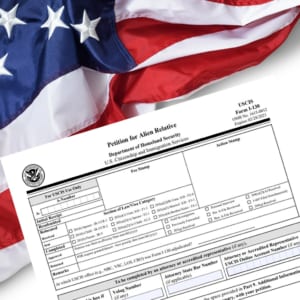
A Form I-864 is one of the required documents in the U.S. immigrant visa application process , especially for family-based categories and some employment-based cases. The Form I-864 allows the U.S. government to assess the financial capability of the sponsor to ensure that the intended immigrant will not become a public charge after arriving in the United States.
In this article, we’ll help you understand what a Form I-864 is, how to fill it out, where to submit it, the processing timeline, which visa categories require it, and what documents you need to prepare in order to avoid delays or a rejection.
What is an I-864 Affidavit of Support?
A Form I-864, also known as the Affidavit of Support, is a document required by the U.S. Department of State (“DOS”) for most family-based immigrant visa applications, as well as some employment-based cases.
The purpose of Form I-864 is to prove that the petitioner (sponsor) has adequate financial means to support the intended immigrant once they arrive in the United States.
The Form I-864 is a legally binding contract between the sponsor and the U.S. government, ensuring that the immigrant will not rely on public benefits or become a financial burden.
Where Can I Download an I-864 Affidavit of Support?
The Form I-864 can be downloaded at https://www.uscis.gov/i-864
Note: The National Visa Center (“NVC”) will only accept this form after the required visa processing fees have been paid.
Where to Submit a Form I-864? Can It Be Filed Online?
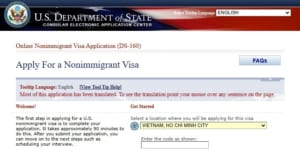
You can submit Form I-864 online through the DOS’s Consular Electronic Application Center .
In some cases, the NVC may request a hard copy, depending on the visa category and the specifics of your case.
Form I-864 Processing Time
On average, it takes 4 to 6 weeks for NVC to process the Form I-864, assuming it is properly completed and includes all required supporting documents.
To avoid delays, it is highly recommended to submit Form I-864 as soon as it is requested, especially if your case is moving toward the interview stage.
Required Supporting Documents for a Form I-864
When submitting a Form I-864, make sure to include the following documents:
- A copy of your federal income tax return (Form 1040, W-2, 1099, or IRS transcript);
- Proof of current income (such as recent pay stubs, employment verification letters, or contracts);
- Proof of assets, if income is below the required level;
- Proof of relationship between the sponsor and the intending immigrant (if applicable).
Quick Summary of a Form I-864
| Item | Details |
| Purpose | Financial sponsorship commitment from the petitioner |
| Where to Submit | CEAC (online) or physical copy (if requested by NVC) |
| Processing Time | 4–6 weeks |
| Visas That Require Form I-864 | Family-based, some employment-based visas |
| Visas That Don’t Require Form I-864 | EB-5, independent employment-based categories |
Frequently Asked Questions about a Form I-864
1. What if my income doesn’t meet the minimal financial requirement?
You can supplement your income with personal assets or have a Joint Sponsor submit an additional Form I-864.
2. Does the Joint Sponsor have to be a relative?
No. A Joint Sponsor must simply be a U.S. citizen or lawful permanent resident, at least 18 years old, and meet the income requirement. They do not need to be related to the immigrant or the petitioner.
3. Will my visa interview be delayed if the Form I-864 is rejected?
Yes. If Form I-864 is incomplete, inaccurate, or the sponsor doesn’t meet financial eligibility, the visa may be delayed or denied.
Conclusion: Mastering the Form I-864 to Avoid Visa Delays
The Form I-864 is a mandatory and critical component of the U.S. immigration process for family-based and certain employment immigrant visa categories. . Understanding the process, preparing the necessary documents, and submitting the form on time are key to ensuring your case is processed smoothly and without delay.
For more information on filing a Form I-130, contact us today at info@enterlinepartners.com and speak with a U.S. immigration attorney based in Ho Chi Minh City, Manila and Taipei.
ENTERLINE & PARTNERS CONSULTING
Ho Chi Minh City, Vietnam Office
Suite 601, 6th Floor
Saigon Tower
29 Le Duan Street
Ben Nghe Ward, District 1
Ho Chi Minh City, Vietnam
Tel: +84 933 301 488
Email: info@enterlinepartners.com
Website: https://enterlinepartners.com/
Manila, Philippines Office
Unit 2507 Cityland 10 Tower 1
156 H.V. Dela Costa Street
Makati City, Philippines 1209
Tel: +632 5310 1491
Email: info@enterlinepartners.com
Copyright 2021. This article is for information purposes only and does not constitute legal advice. This article may be changed with or without notice. The opinions expressed in this article are those of Enterline and Partners only.