
A common question asked by potential clients is: “Do I need an immigration lawyer to file a K-1 visa for my Vietnamese fiancé/fiancée?” While the short answer is no, having an immigration lawyer represent you and your fiancé through the K-1 visa process has significant advantages.
The Benefit of a Licensed K-1 Visa Professional
An immigration lawyer is more than just a consultant; they are a licensed professional. Unlike visa companies or agencies that rely on non-lawyers, an immigration lawyer is a licensed by a State and a member of a professional lawyer’s association referred to as a State Bar. Such a lawyer is licensed to represent clients for K-1 visa matters and other U.S. immigration issues.
Navigating the K-1 Visa Process with Expert Knowledge
An immigration lawyer holds deep and thorough knowledge of the overall K-1 visa process. Just like a physician who is able to make a quick diagnosis upon examining a patient’s symptoms, an immigration lawyer is able to review and quickly offer fast, concrete solutions to potential issues that could arise with a K-1 visa for your Vietnamese fiancé/fiancée.
Some of these common issues that could be a barrier to receiving a K-1 visa include:
- Language and culture barriers between the U.S. citizen and Vietnamese fiancé/ fiancée;
- Significant age gaps;
- Socioeconomic gaps.
By consulting and retaining an experienced immigration lawyer who has worked with Vietnamese clients, you take comfort in knowing you are working with a professional who can offer solutions and strategies tailored to your specific case.
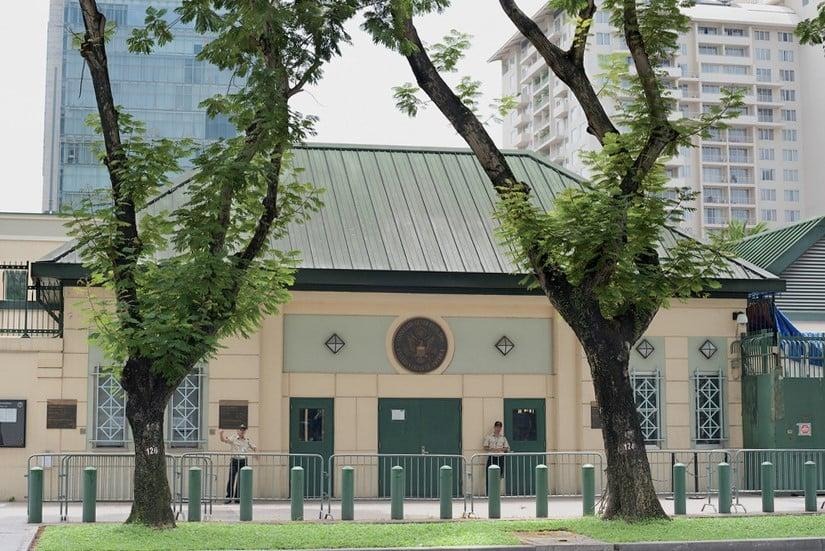
U.S. Consulate General in Ho Chi Minh City
5 Specific Benefits of Having an Attorney for a K-1 Case
| # | Benefit | Why It Matters for Vietnamese K-1 Cases |
|---|---|---|
| 1 | Early identification of potential issues | The attorney reviews the case before filing and identifies barriers: prior criminal history, prior marriages, prior immigration violations |
| 2 | Formal representation before USCIS | Form G-28 allows the attorney to communicate directly with USCIS if a Request for Evidence (RFE) or other issue arises |
| 3 | Support at the HCMC or Manila consular interview | The attorney can represent the couple before DOS at the consular stage; visa services cannot do this |
| 4 | Strategy for cases with complicating factors | Large age gaps, language barriers, socioeconomic differences: an attorney knows how to frame and document these |
| 5 | Up-to-date knowledge of policy changes | K-1 policy changes frequently (social media screening effective March 2026, interview waiver changes September 2025): attorneys stay current |
Representation Across U.S. Immigration Agencies
Obtaining a U.S. K-1 visa for your Vietnamese fiancé involves two U.S. immigration agencies: United States Citizenship and Immigration Services (“USCIS”) and the Department of State (“DOS.”)
- USCIS: When you retain an immigration lawyer to file an I-129F Petition with USCIS, he will include a Form G-28, Notice of Entry as Attorney or Accredited Representative. This indicates that you and your fiancé are officially represented. In the event that there are problems with processing, your lawyer can communicate directly with the agency on your behalf.
- DOS: Once the -129F Petition is approved and sent to the U.S. Consulate in Ho Chi Minh City which is under the auspices of DOS, an immigration lawyer can continue to represent you and your fiancé through the interview stage.
Summary: Is Legal Help Right for Your K-1 Visa?
| Question | Answer |
|---|---|
| Is an attorney legally required? | No: you may file Form I-129F without an attorney |
| How does a licensed attorney differ from a visa service? | An attorney is licensed by a U.S. State Bar; a visa service is not a law firm and cannot provide legal representation |
| Can an attorney represent you before USCIS? | Yes: through Form G-28; visa services cannot do this |
| Can an attorney represent you at the U.S. Consulate in HCMC? | Yes: in the consular interview stage before DOS |
| When is an attorney most valuable? | When the case has complicating factors: prior marriages, criminal history, age gap, low income |
| Is Enterline and Partners a licensed law firm? | Yes: licensed U.S. immigration attorneys, members of AILA |
While the law doesn’t require it, the complexities of the K-1 visa for a Vietnamese fiancé often make legal representation a wise investment. Having an expert ensures that your journey from the initial petition to the final interview is handled with professional precision and care.
For more information on how consulting and hiring a U.S. immigration lawyer can be beneficial to you and your Vietnamese fiance, contact us at info@enterlinepartners.com to speak with one of our immigration lawyers.
Frequently Asked Questions
Is it legally required to hire an immigration attorney to file a K-1 visa?
No. U.S. law does not require you to have an immigration attorney to file Form I-129F for a K-1 fiance visa. You have the right to file on your own. However, a licensed U.S. immigration attorney provides formal legal representation before both USCIS and the U.S. Department of State that standard visa services are not authorized to provide, which is a meaningful advantage, especially when the case involves any complicating factors.
What is the difference between a licensed immigration attorney and a standard visa service?
A licensed immigration attorney is authorized to practice law by a State Bar in the United States, is trained in U.S. immigration law and can formally represent clients before USCIS (through Form G-28) and before the U.S. Department of State at the consular stage. Under U.S. law, standard visa services that are not law firms are not authorized to represent clients before these agencies; they may only assist with completing forms. This is an important legal distinction, not just a marketing one.
How does an attorney help if USCIS sends a Request for Evidence (RFE)?
This is one of the most concrete benefits of attorney representation. When USCIS sends an RFE, the attorney: receives the notice directly because Form G-28 is on file; analyzes what USCIS is asking and determines the best response; prepares a complete and timely response; and can correspond directly with USCIS to clarify any further questions. Standard visa services do not have the legal authority to perform any of these functions on behalf of a client.
Can Enterline and Partners support the consular interview stage at the U.S. Consulate in Ho Chi Minh City?
Yes. After the I-129F petition is approved by USCIS and the case is transferred to the U.S. Consulate General in Ho Chi Minh City, Enterline and Partners continues to represent both the petitioner and the Vietnamese fiance through the interview stage. With our office located directly at Level 6 and 7, Friendship Tower, 31 Le Duan, Ho Chi Minh City, we have direct practical experience working with the Consulate.
If my case seems straightforward, do I still need an attorney?
Not required, but even cases that appear straightforward can encounter unexpected issues. Form errors in the DS-160, document inconsistencies or missing evidence can cause significant delays. A licensed attorney will review the entire application before submission to ensure everything is consistent, complete and current with the latest policy changes including the social media screening requirement effective March 2026. The decision is yours to make, but it should be made with full information.
ENTERLINE AND PARTNERS CONSULTING
Ho Chi Minh City, Vietnam Office
Level 6 & 7, Friendship Tower, 31 Le Duan Street, Sai Gon Ward
Ho Chi Minh City, Vietnam
Tel: +84 933 301 488
Email: info@enterlinepartners.com
Facebook: Enterline & Partners – Dịch vụ Thị thực và Định cư Hoa Kỳ
YouTube: @EnterlineAndPartnersConsulting
Website: https://enterlinepartners.com
Manila, Philippines Office
LKG Tower 37th Floor
6801 Ayala Avenue
Makati City, Philippines 1226
Tel: +63 917 543 7926
Email: info@enterlinepartners.com
Facebook: Enterline and Partners Philippines
Website: https://enterlinepartners.com/en/home/
Copyright 2026. This article is for information purposes only and does not constitute legal advice. This article may be changed with or without notice. The opinions expressed in this article are those of Enterline and Partners only.