Enterline & Partners Consulting | info@enterlinepartners.com

News & Resources

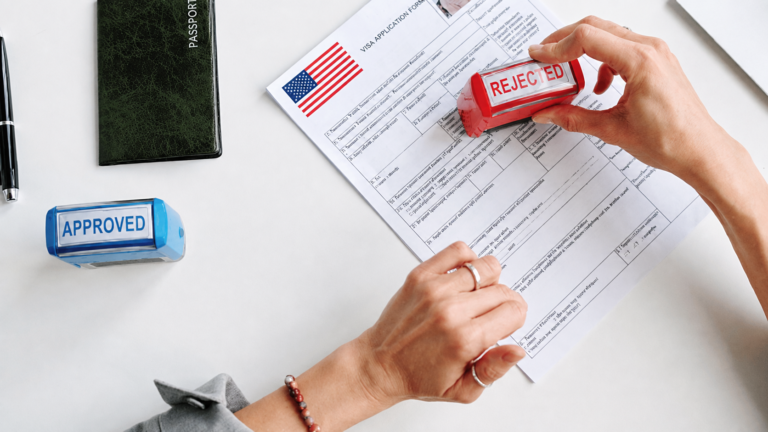
What medical conditions would cause you to be denied an immigrant visa?

Part 1 – a communicable disease of public health significance This is a common question we are asked. This Part 1 of a series discusses what medical conditions might cause a person to be denied an immigrant visa. The United States Immigration and Naturalization Act (the “Act”), Section 212(a)(1) prescribes

Obtaining a U.S. K-1 Visa for your Fiancée or Fiancé

To bring your fiancé(e) to the United States, you must file Form I-129F (Petition for Alien Fiancé(e)) and prove that you and your fiancé(e) have met in person within the two years immediately preceding the filing of the petition. If you cannot prove that you have met, can you obtain

What Kind of U.S. Visa Do I Need to Study In The USA?

Students wishing to study in the USA are able eligible for three different U.S. visas: F-1 Student Visa.  This visa covers private high schools, colleges, graduate and professional degree programs (i.e. medicine, law, dentistry, etc.) provided that the educational program is intended for a degree. To be eligible, the applicant

What Do You Need to Get a Visa for the USA?

In order to be issued a U.S. visa, you must apply directly through either the U.S. Embassy in Hanoi or the U.S. Consulate in Ho Chi Minh City. All applicants are required to fill out a DS 160 online application and pay the visa processing fee. The fee depends on

Step-by-Step Guide to the K-1 Fiance(é) Visa Process

Applying for a K-1 fiancé(e) visa involves multiple government agencies, including United States Citizenship and Immigration Services (“USCIS”), the National Visa Center (“NVC”), and the appropriate U.S. Embassy or Consulate. As a result, the process requires careful coordination at each stage. If you are researching how to apply for a

F4 Visa Bulletin Update: Waiting Time for Family-Based Sibling Immigration

The U.S. immigration system provides a specific pathway for U.S. citizens to sponsor their siblings for lawful permanent residency (“Green Card.”) The Family-Based Fourth Preference (F4) category is dedicated to the brothers and sisters of adult U.S. citizens ages twenty-one (21) and above. While this is a popular route for

K-1 Visa Applicants Subjected to Social Media Vetting

Effective March 30, 2026, all K-1 fiancé(e) visa applicants will be subjected to the Department of State (“DOS”) online vetting process. As part of the interview process at the Embassy or Consulate, those applying for a K-1 visa will be required to adjust their social media settings to “public” or

Vietnamese Names Listed in a Different Order on U.S. Visas and Green Cards

United States government posts have frequently listed Vietnamese citizens’ names on government documents in a different order such as on visas and Form I-551 (“Green Cards”.) This often happens because Vietnamese passports list names in the order of last name (or “family name” or “surname”) followed by the middle name

Visa Retrogression Explained: Differences Between Retrogression and Backlogs

Visa retrogression is a situation where the Department of State (“DOS”) adjusts the Final Action Date and Dates For Filing backwards on the DOS monthly Visa Bulletin. This occurs when the demand for immigrant visas in a specific visa category exceeds the estimated supply, causing applicants who were previously eligible

CATEGORY
recent posts
CTA_Collection
Zalo
Phone
WhatsApp
Messenger
Messenger
WhatsApp
Phone
Zalo